Will You Sign My Blue Card?
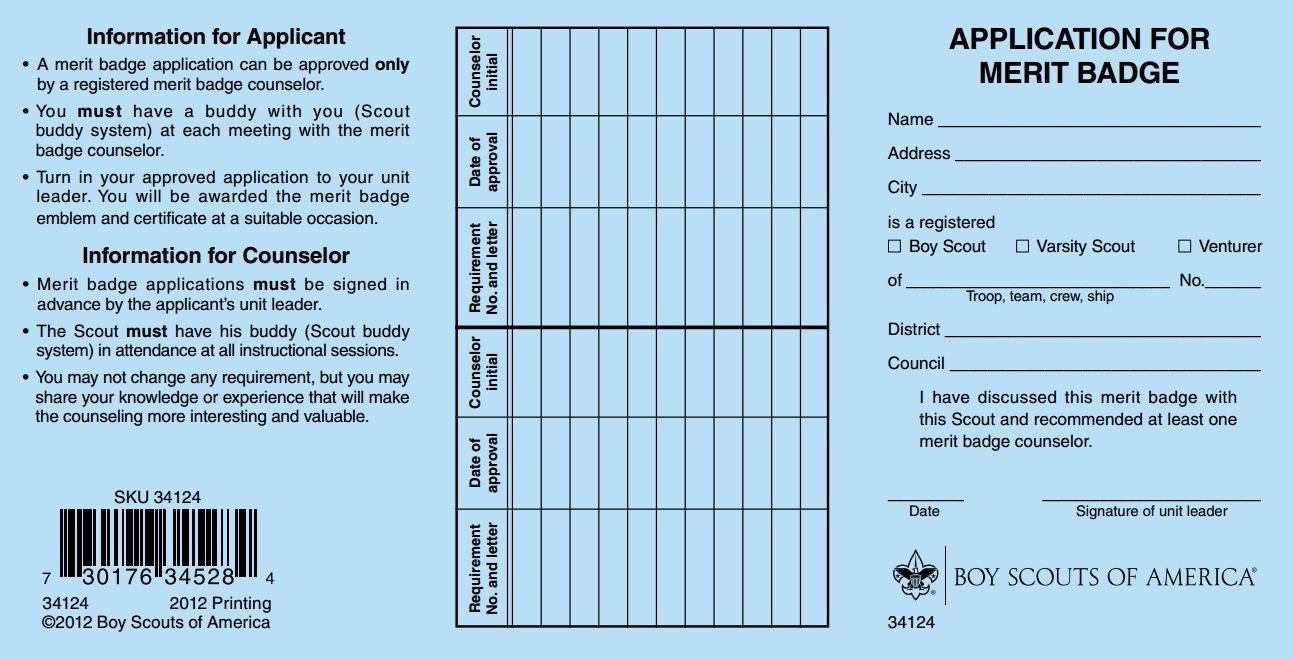
There are numerous forums online in which parents of Scouts discuss, well, all aspects of Scouting, policy, and their individual units. One topic that comes up frequently is the requirement that Scouts obtain their unit leader’s (i.e. Scoutmaster) signature to start a merit badge. Many argue—incorrectly—that this step is merely suggested and not required. Another common point of view is that that step is a kind of arbitrary hurdle that Scoutmasters use as a gateway to slow a Scout’s progress, play favorites, or just exercise undue control.
In fact, this small step has numerous benefits to both the Scout and the unit:
1. Some Scouts bite off more than they can chew
Requiring a Scout to obtain their Scoutmaster’s signature is a way for the Scoutmaster to notice when a Scout starts their 10th or 20th merit badge while the other 9 or 19 are still unfinished. It gives us a chance to encourage that Scout to complete some of the things they've started.
2. Recommending counselors
Scouts and parents don't have direct access to the list of approved merit badge counselors. When a Scout starts a badge, I'll research a couple of counselor options for them and provide contact information. Often, the recommendations are deliberate. I might pair a Scout with autism with a counselor who is also autistic. I might pair an older Scout with a counselor who also happens to be on our district's Eagle Review board to help establish a connection. Sometimes I avoid recommending particular counselors for certain Scouts for a variety of reasons designed to benefit the Scout.
3. Noticing trends
Meeting with Scouts about their merit badge ambitions tips me off to interests/needs in the troop. If a large number of Scouts start merit badges for canoeing, kayaking, and rowing, it’s a good signal to us that there is demand in our unit for more water-based activities.
4.The inherent value in learning to respect structure and procedure
In life, following certain steps is just a practical reality. You need a permit before you can start a remodel. Adding or dropping a class in high school or college requires specific approval in a specific order. In Scouts, we follow certain steps to ensure safe, inclusive, and fun activities (writing a float plan before a canoe trip, for example). A small thing like a Scout meeting with their Scoutmaster before starting a merit badge reinforces the importance of procedure. Pus, when that Scout starts working on their Eagle rank, they’ll be prepared for the myriad of hoops they will have to jump through. Consider it practice.
5. Helping the Scout be known and seen
A Scout meeting in person with their Scoutmaster helps the Scoutmaster know that Scout better. It's an opportunity to hear why they want to work on a particular badge. This often coincides with their existing hobbies or talents, but can also illuminate their rank ambitions, friendships, or insecurities. It's a small opportunity for me to praise their initiative, offer support, and just generally demonstrate an interest in them. It's a brief but potentially profound touchpoint.
6. Reinforcing that Scouting is a shared experience
Merit badges are Individual achievements, but a Scout should not be navigating the program with the mindset of "what can I get out of it?" Getting the unit leader's approval to start a merit badge is a hurdle if all the Scout wants is to collect badges. If they recognize that Scouting is a shared experience that helps build confidence, accountability, community, etc., then that small step is not a hurdle at all; it is an opportunity.