2025 Gift Guide for Scouts
Looking for that perfect gift for the Scout in your life? We’ve complied a rank-by-rank guide of gear, apparel, books, and games that they’ll actually use.
Most of these recommendations are based on equipment they’ll need or skills they’ve acquired. In most cases the brands and specifications are based on those that Troop 333 Scouts and leaders have tested in the field. For expensive items, we’ve tried to provide some economical alternatives. If you have ideas for items or experiences to add to this list, let us know!
Support Troop 333. If you sign up for Flipgive, the troop receives between 1–10% cash back on your online purchases—at no additional cost to you! Just install the Flipgive browser extension, and automatically start earning cash back for the troop! Flipgive even works for airlines, Airbnb, Instacart and more.
Buying a gift card via Flipgive earns cash for the troop. REI, Northface, Columbia, Nike, and many other outdoor brands participate. You can use gift cards for daily purchases like Starbucks or Chipotle, and even major purchases like air travel, car rentals, Airbnb, and hotels.
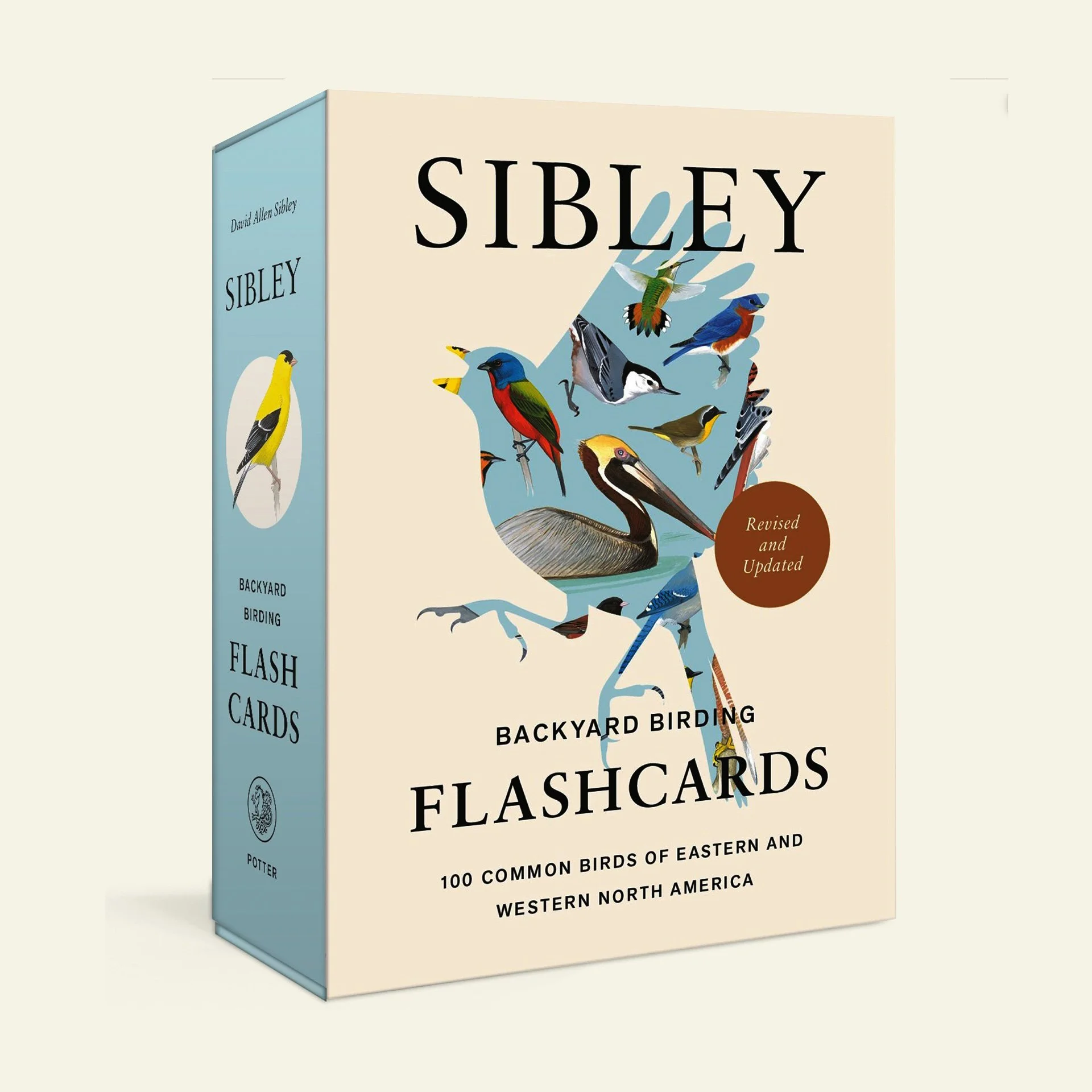
Build your knowledge on a country walk, camping trip or local hike with these beautifully illustrated Clarkson Potter Sibley Backyard Birding flash cards.
$20 from REI
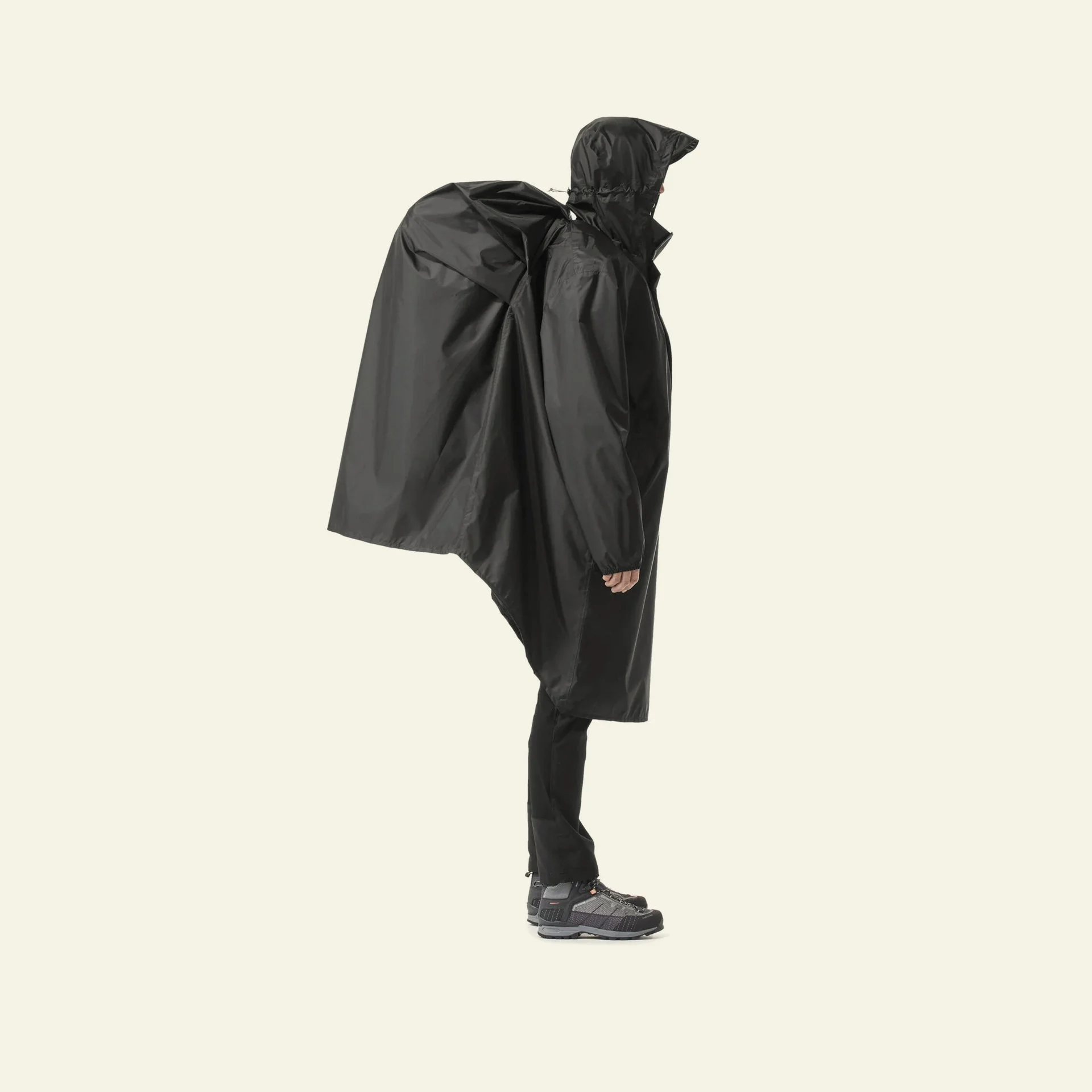
Rain gear of some kind is one of the ten essentials. For hiking and backpacking, many Scouts favor ponchos over jackets and pants. This quick-to-put-on cape will protect you and your pack from the rain.
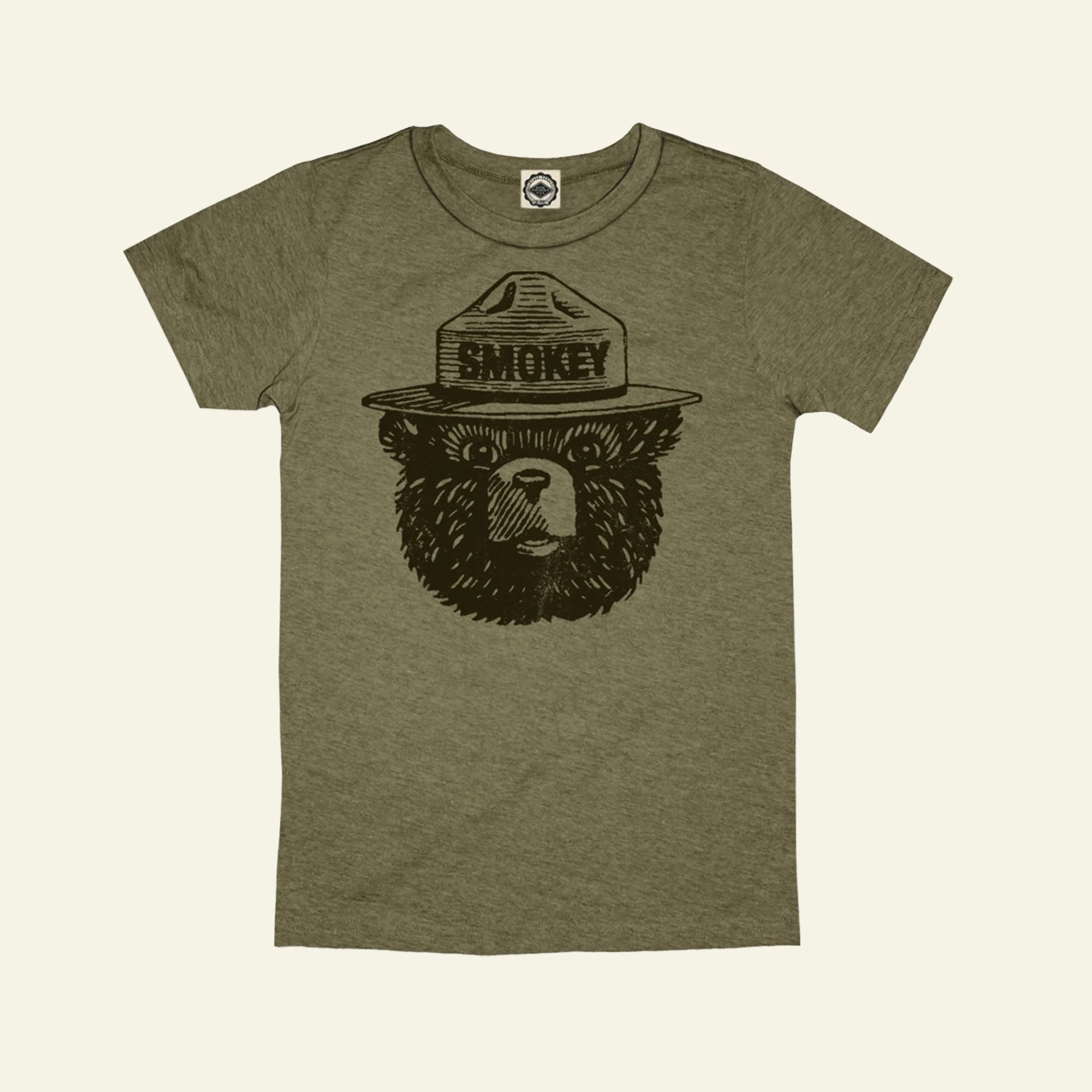
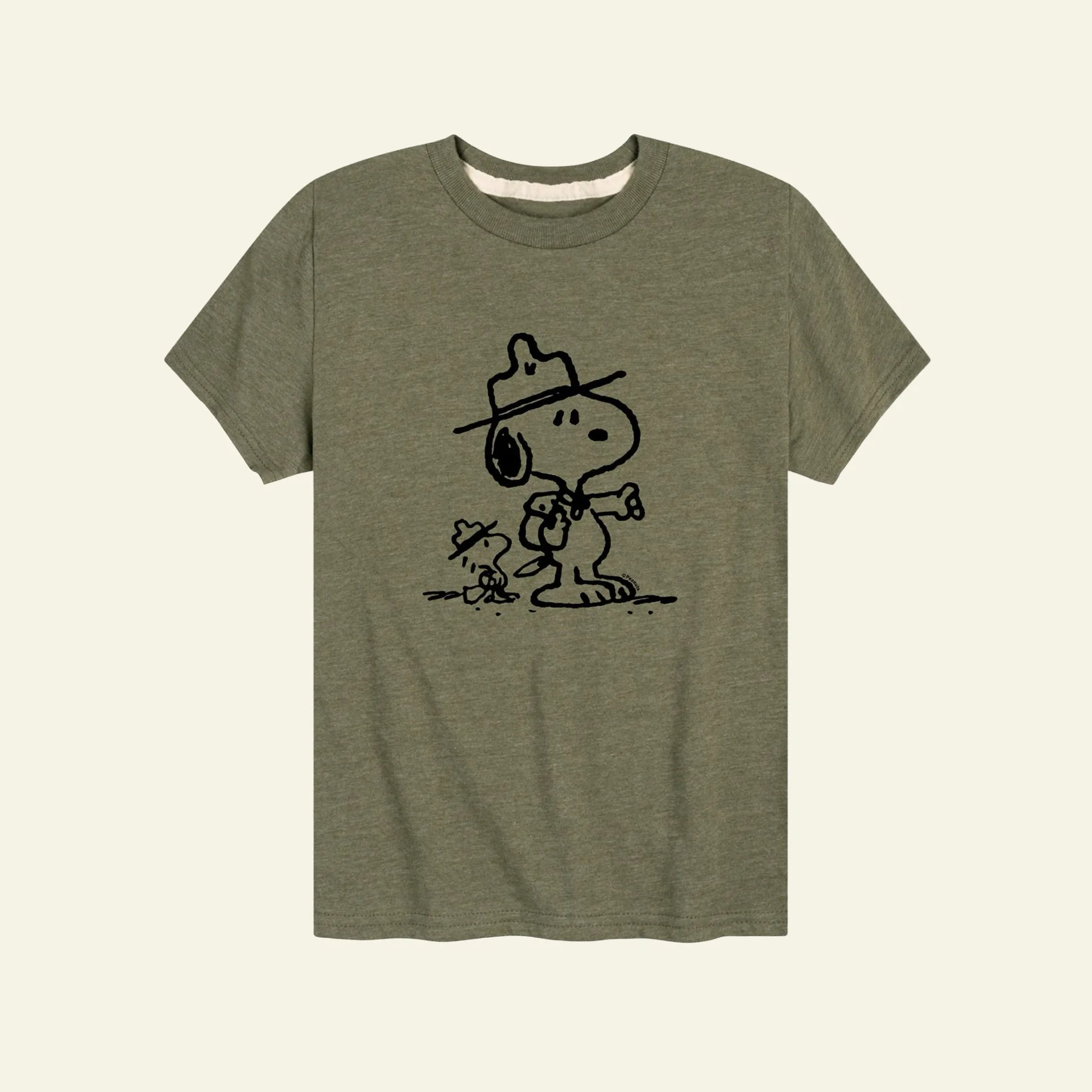
Whether you wear it ironically or proudly, this officially-licensed tee looks great. We also dig the US Forest Service Tee (in 333 colors!)
$25 at Hank Player
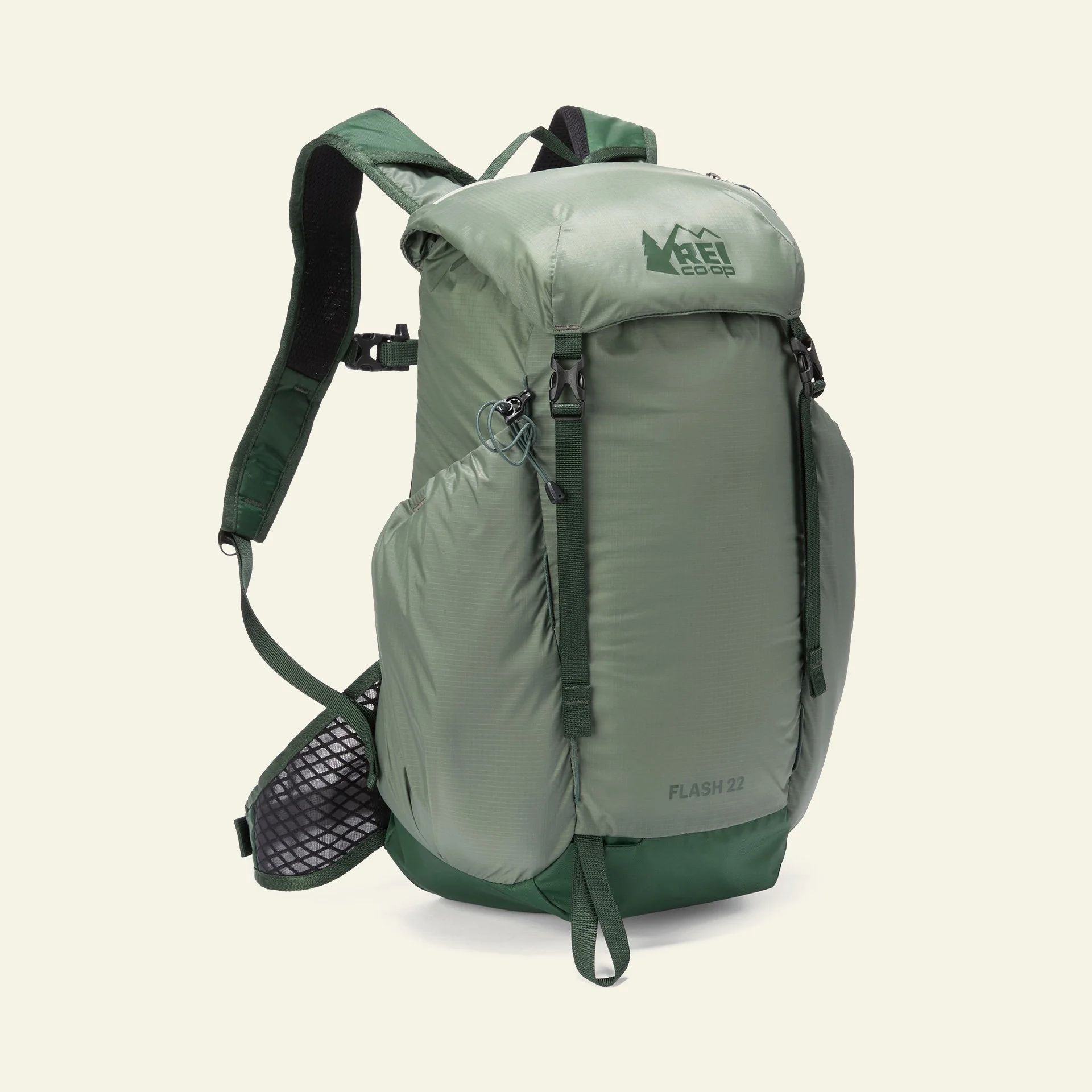
Suited for short hikes and daily use, this 22L daypack may be a better size and fit for some Scouts than our other troop favorite, the Osprey DayLite. It offers a balance of comfort and organization, has a breathable back panel, tuck-away hip belt, hydration sleeve, zippered side-entry pocket, tall bottle pockets, and exterior loops for attaching additional gear. The slip-out back pad also doubles as a sit pad.
$60 from REI
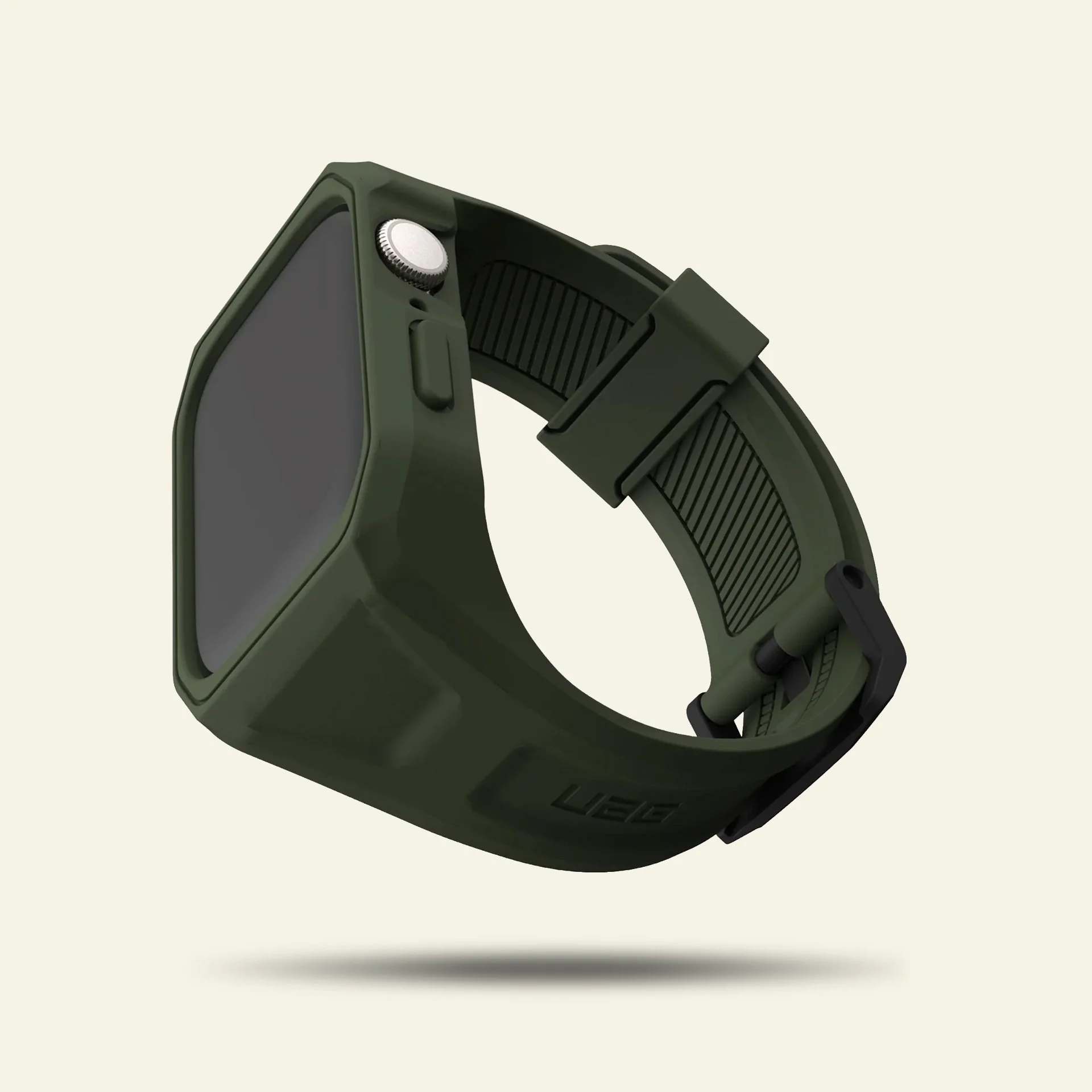
You’re not going to find a lot of tech on our list, but we know a lot of our Scouts are wearing Apple watches now. Keep your device protected with this affordably-priced, attractively-designed, all-in-one case and strap.
$29 from UAG
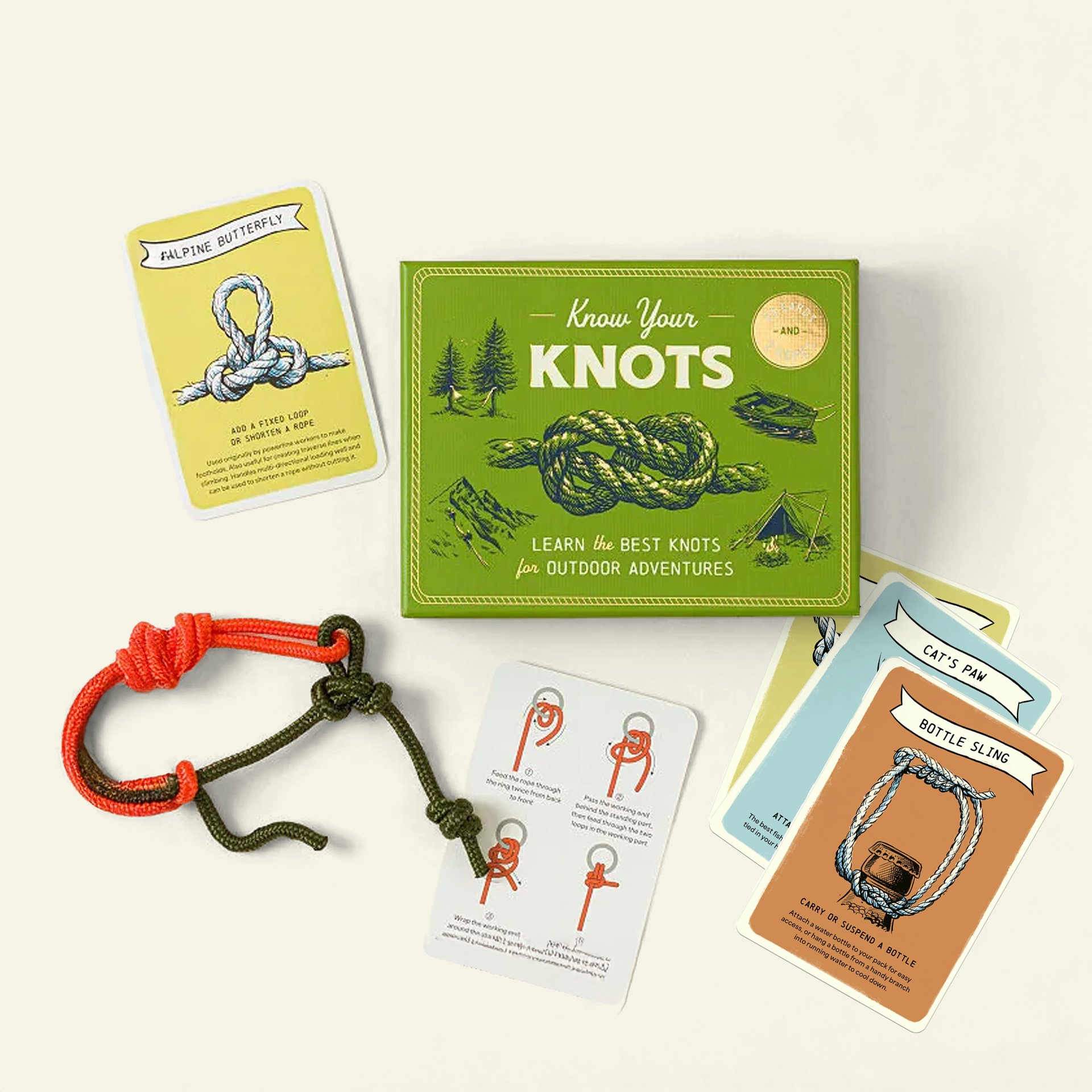
Learn the best knots for outdoor adventures with Know Your Knots. This practical knot-tying kit includes 30 easy-to-learn flashcards and two 2-foot-long practice ropes.
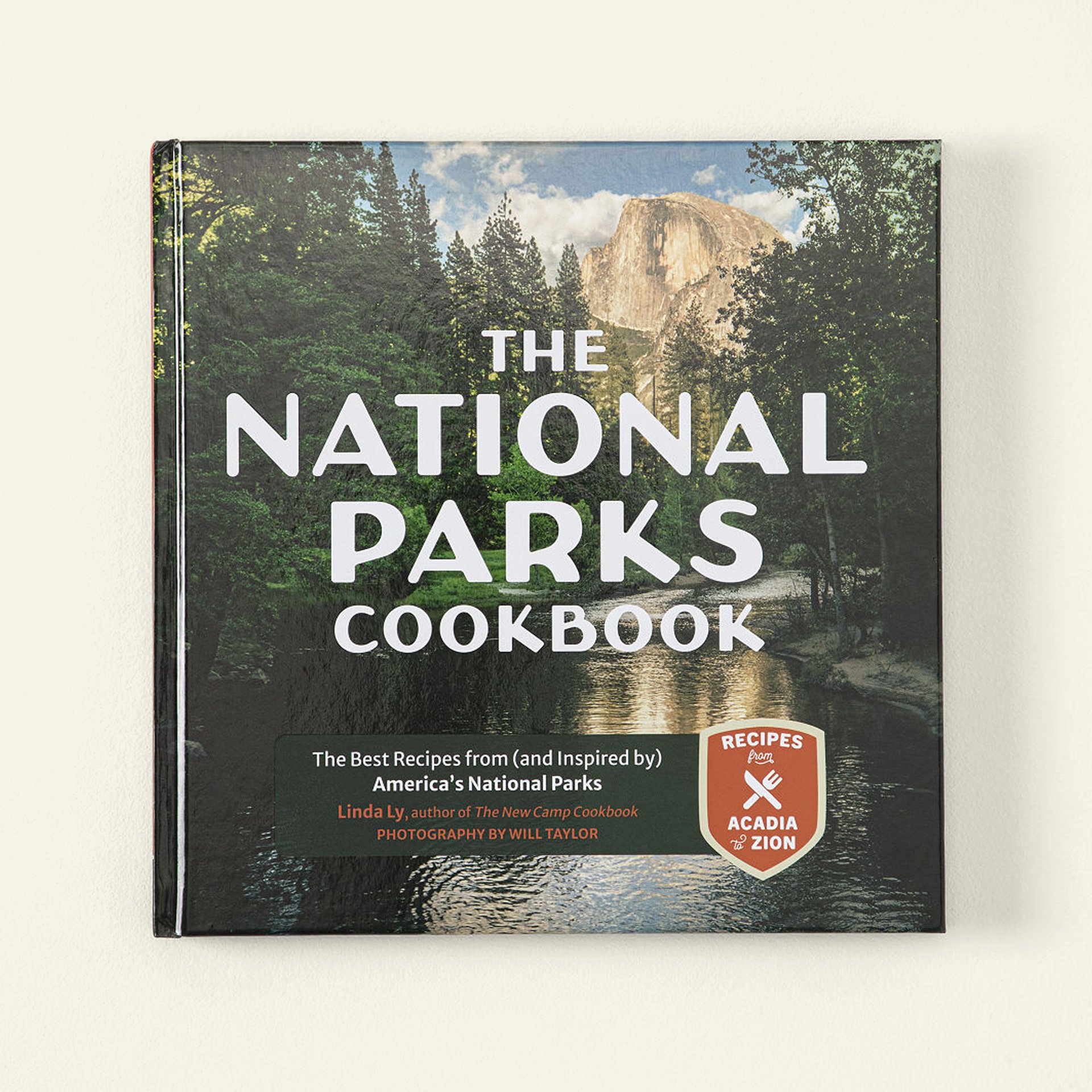
Did you know that the boysenberry pie at Yosemite National Park has been made the same way for the last 60 years? All over the US, national parks have signature food offerings. This cookbook collects more than 70 of those recipes, inspired by their iconic lodges, landscapes, and chefs. Makes a helpful nudge for Scouts needing to complete requirement 4 of their Cooking merit badge, or cooking requirements for Tenderfoot, Second Class, or First Class.
$26 from Powell’s
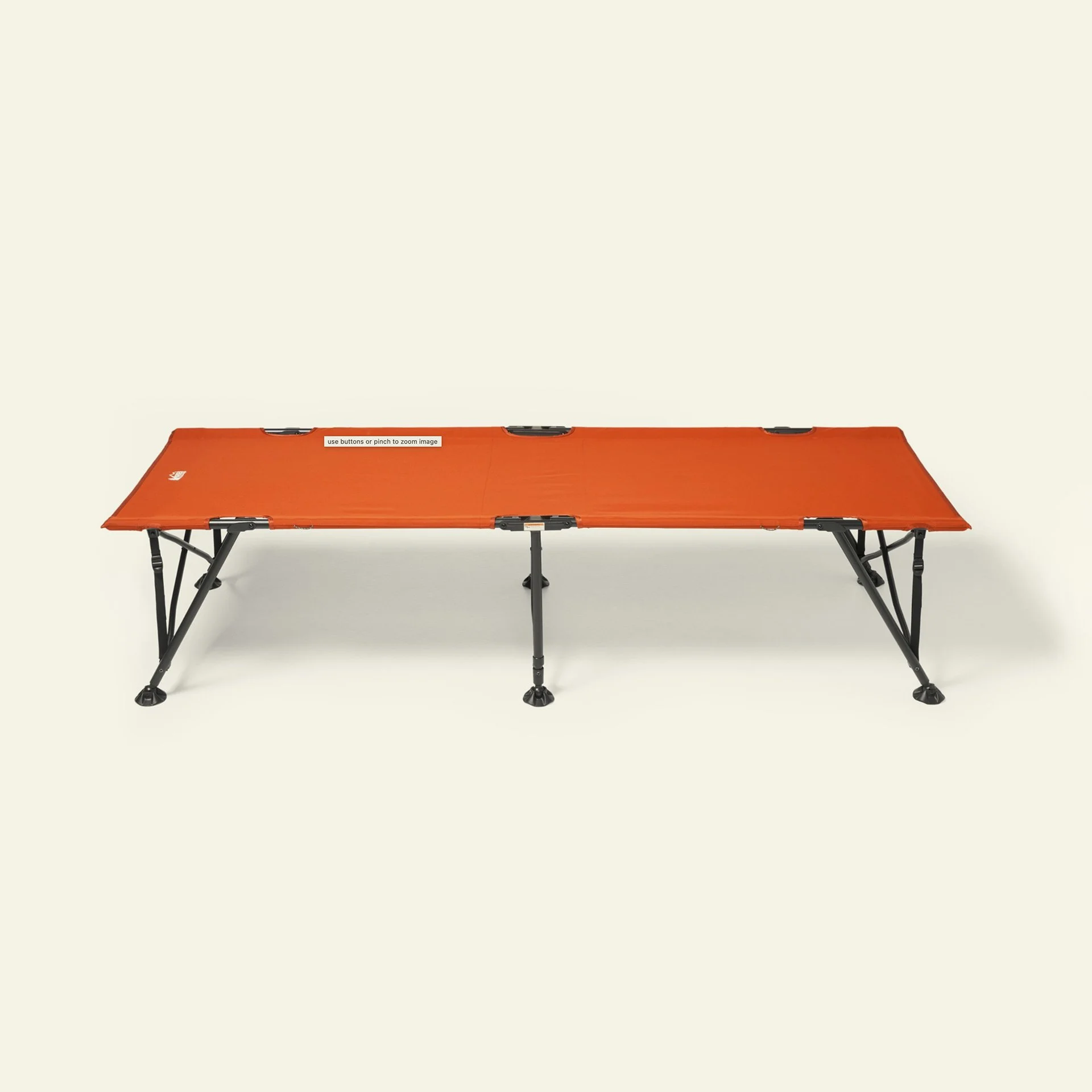
A camping cot is the first and most essential upgrade most Scouts bring to summer camp. We like the design of the Campwell Cot from REI because the support legs and height allow for plenty of storage underneath, giving you more shared space and keeping your tent tidy for morning inspection. Coleman makes a slightly cheaper version, but we prefer REI’s wuality.
$99 from REI
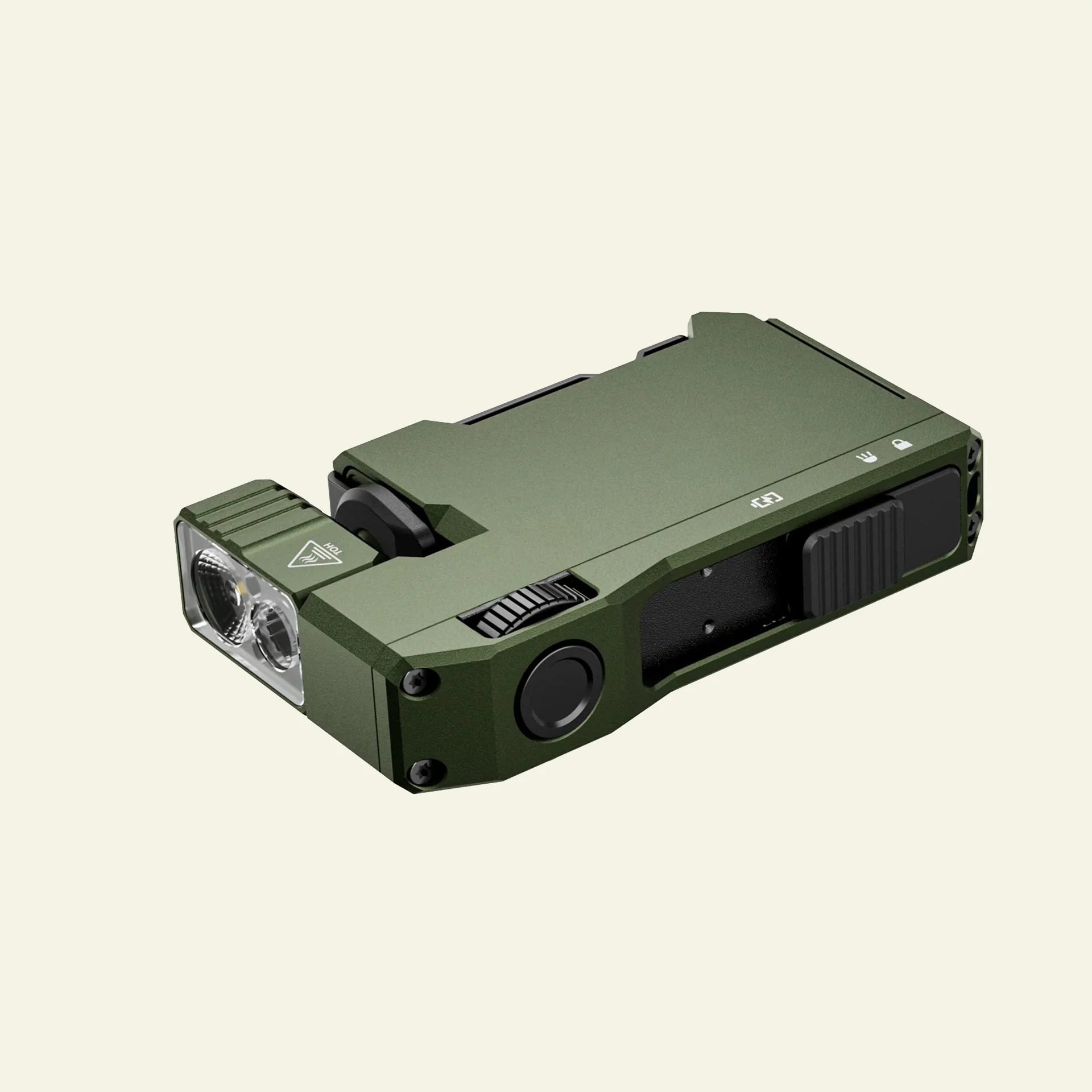
It’s the EDC light that’s all over TikTok and Instagram. It’s compact, rugged, rechargeable, has a 180˚ degree rotating head, enough diall, switches, and toggles to give it a satisfying, gadgety feel.
$19 from Wuben
The right base layer can help keep a Scout dry, warm (or cool), and better smelling. Wool is by far the best choice. Silk and synthetics work too. Base layers should be close-fitting (their job is to wick moisture and provide insulation next to the skin). Smartwool and Patagonia are top-rated but pricey brands. REI’s Midweight line is a more affordable and high-performing option. Because younger Scouts will outgrow their clothes quickly, we recommend Uniqlo’s Heattech line. It gets favorable reviews from many experienced backpackers.
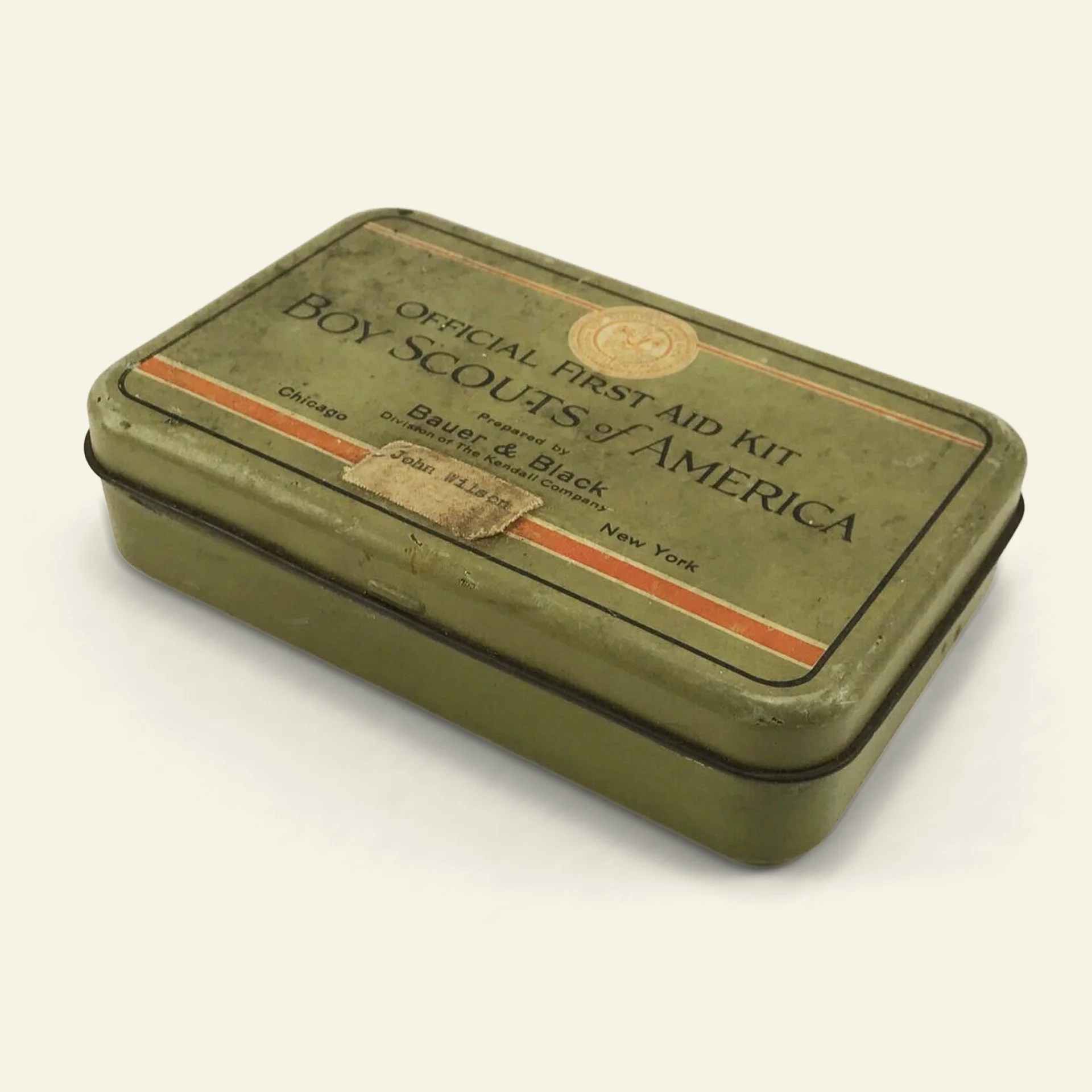
The best first aid kit is one a Scout assembles themself, but for readymade kits one of our favorites is the Adventure Medical Kit .7 ultralight. It’s compact, lightweight, and waterproof. We’d recommend adding in an Ace Bandage, some electrolyte packs, and some Steri-Strips to round it out. The smaller .5 version is a solid choice too. The vintage first aid kit pictured here isn’t practical for actual outdoor use, but they make cute desk accessories for the Scout in your life and can be found on ebay.
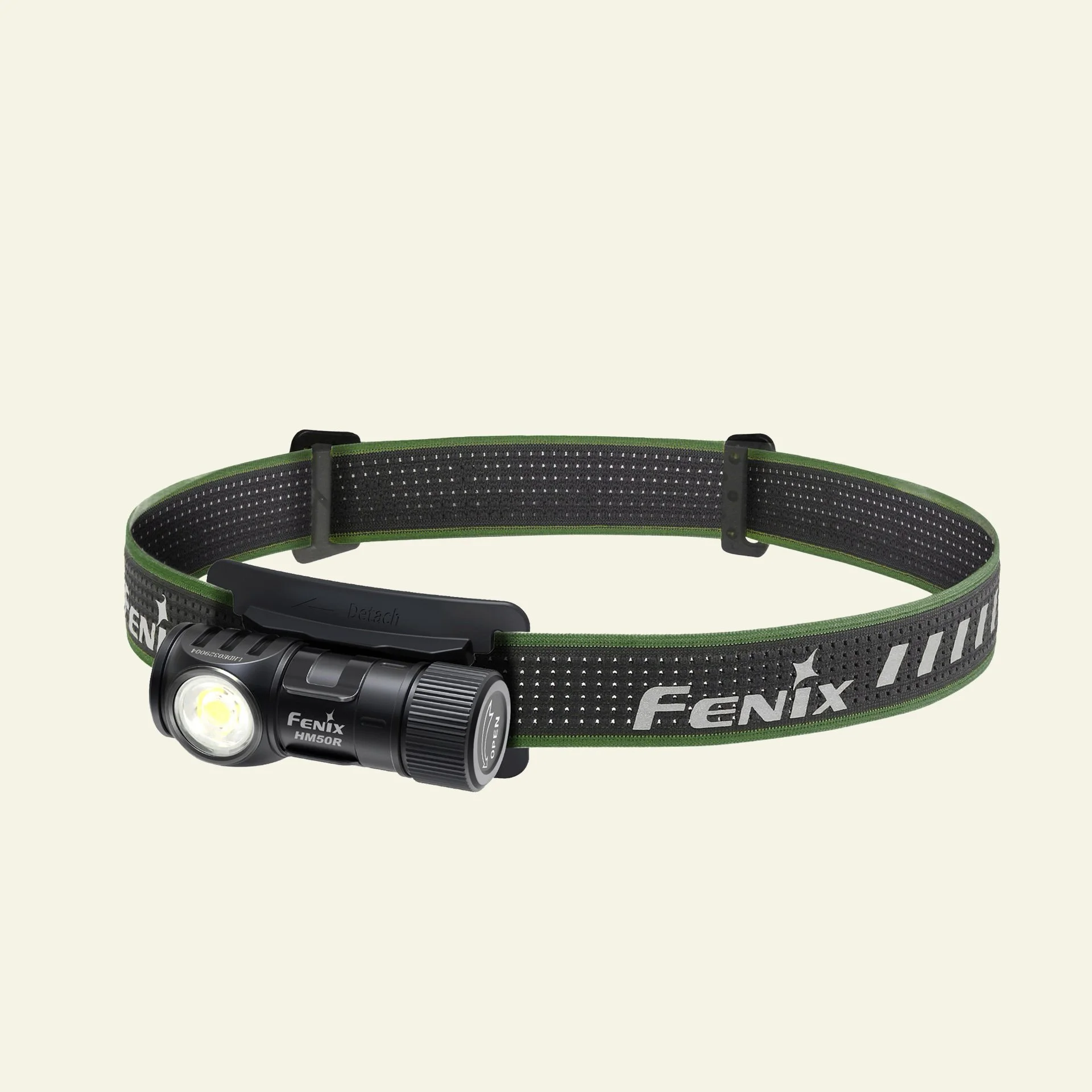
Headlamps are great alternatives to flashlights, leaving your hands free to for other tasks like cooking, carrying trekking poles, etc. Black Diamond and Petzl are two quality brands. Black Diamond’s Astro 300 is a bargain at $20. As you go up in price you’ll get brighter lights and more features—like rechargeability and night vision saving red light options.
Tip: Opt for an orange casing and headband to make your headlamp easier to find in your pack
A Scout should have pen and paper on them at all times. This compact, highly visible, waterproof pen from Rite in the Rain should be staple in any pack.
$7 from Rite in the Rain
Safe for tents, lightweight, and sustainable, these slim, collapsible lanterns are convenient—but not essential—upgrade to your camping experience. And they let you save your more powerful battery-powered lights for when they’re really needed.
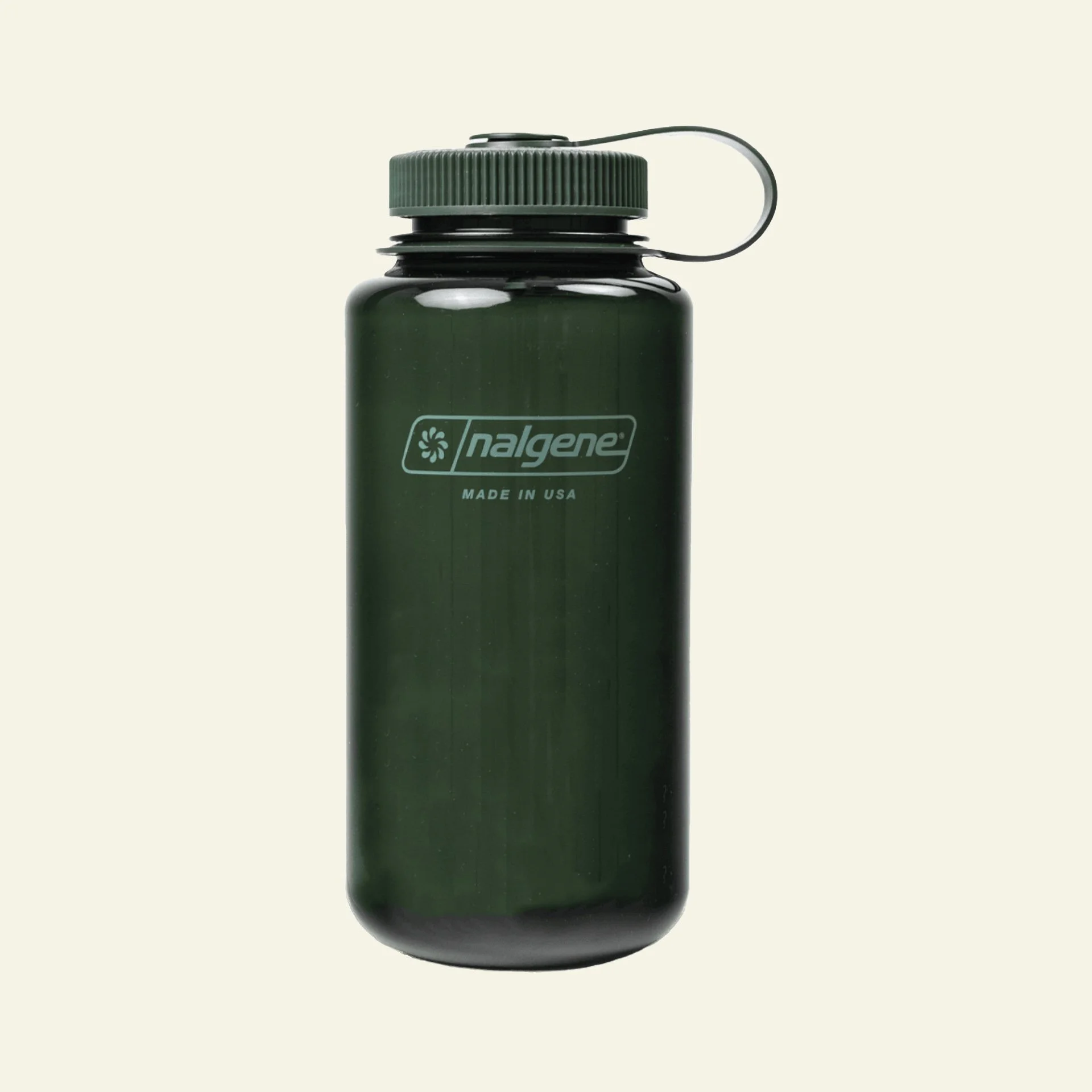
One of the 10 Essentials. Nalgene brand water bottles are cheap and durable. They come in a range of colors, have tethered caps that won’t get lost, measurements on the side to make cooking easy, and a wide mouth for easy filling. They can even be personalized. If your Scout is a minimalist, their Ultralite line is one of the few times an ultralight version is cheaper than the standard version.
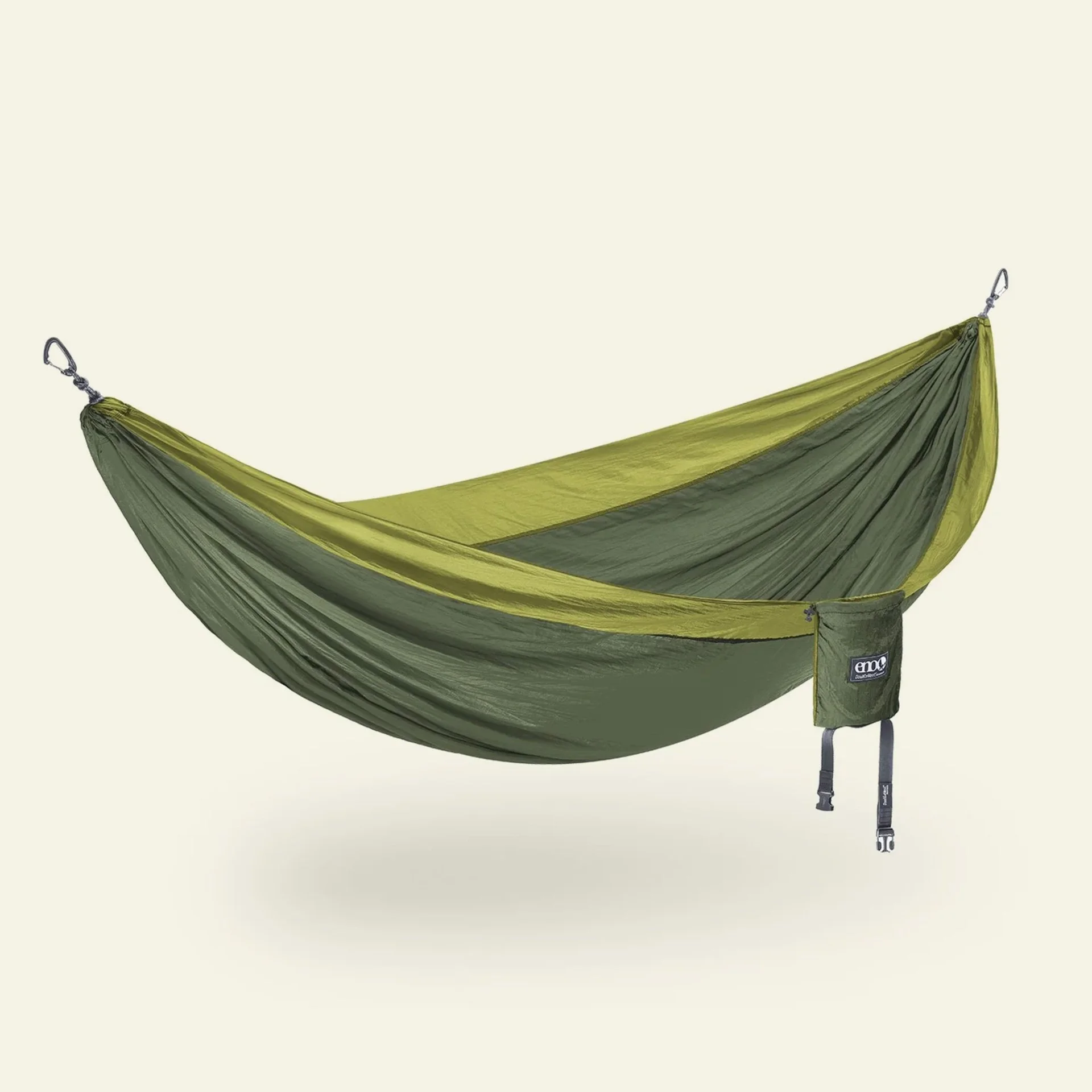
Kids love hammocks. At summer camp, some of our Scouts set up hammocks inside their platform tents. Our Scoutmaster camps in a hammock shelter whenever possible. Ultralight hammocks can be expensive (and to camp in one you’ll want an under quilt), but the Covacure Double Hammock can be found online for around $25 and is a great choice for 1st and 2nd Class Scouts.
The importance of hydration can’t be stressed enough. The rule of thumb while hiking is ½ liter of water per hour—meaning a 32 oz. water bottle will last your Scout about 5 miles. For anything longer, adding a hydration bladder is key. These expandable bladders are suspended inside your pack and have a flexible straw that attaches to your shoulder strap. Some brands have bladders sized specifically for their packs, but by and large they are universal. CamelBak and Hydrapak are reliable choices
$35–$55 at REI
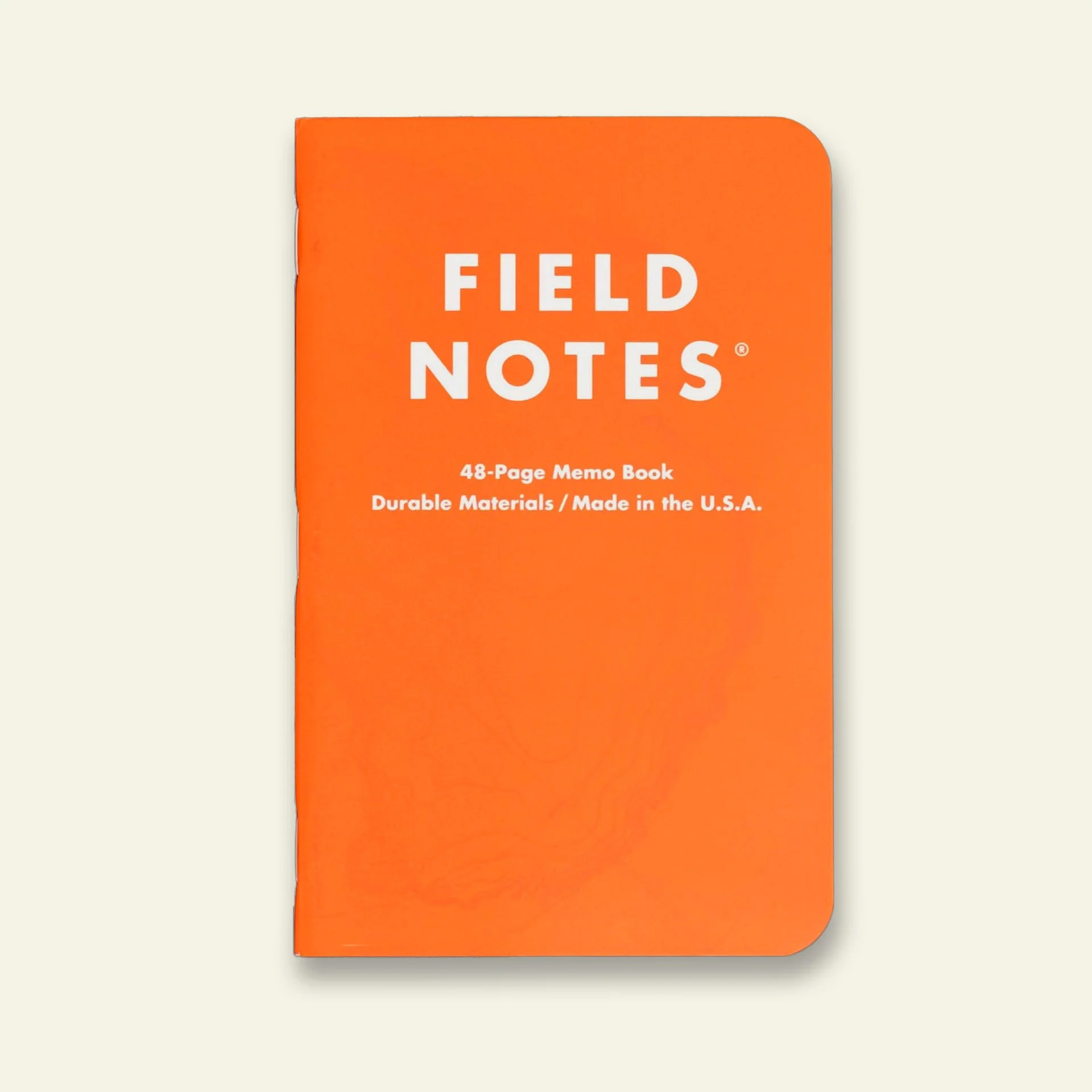
A Scout should have a notebook with them at all times. We took Field Notes brand expedition notebooks with us on our 50-Miler. They’re pocket-sized and made of durable, waterproof paper that you can write on in even the harshest conditions. Rite in the Rain is another maker of waterproof notebooks that has even smaller and less expensive versions you can stash in your survival kit.
$14 from Field Notes
Keep your head warm with toasty with a merino wool beanie. Minus33 makes a highly-rated and very affordable version for just $22. Available in 26 colors but we like Blaze Orange to make head counts easier! Smartwool is another high-quality brand.
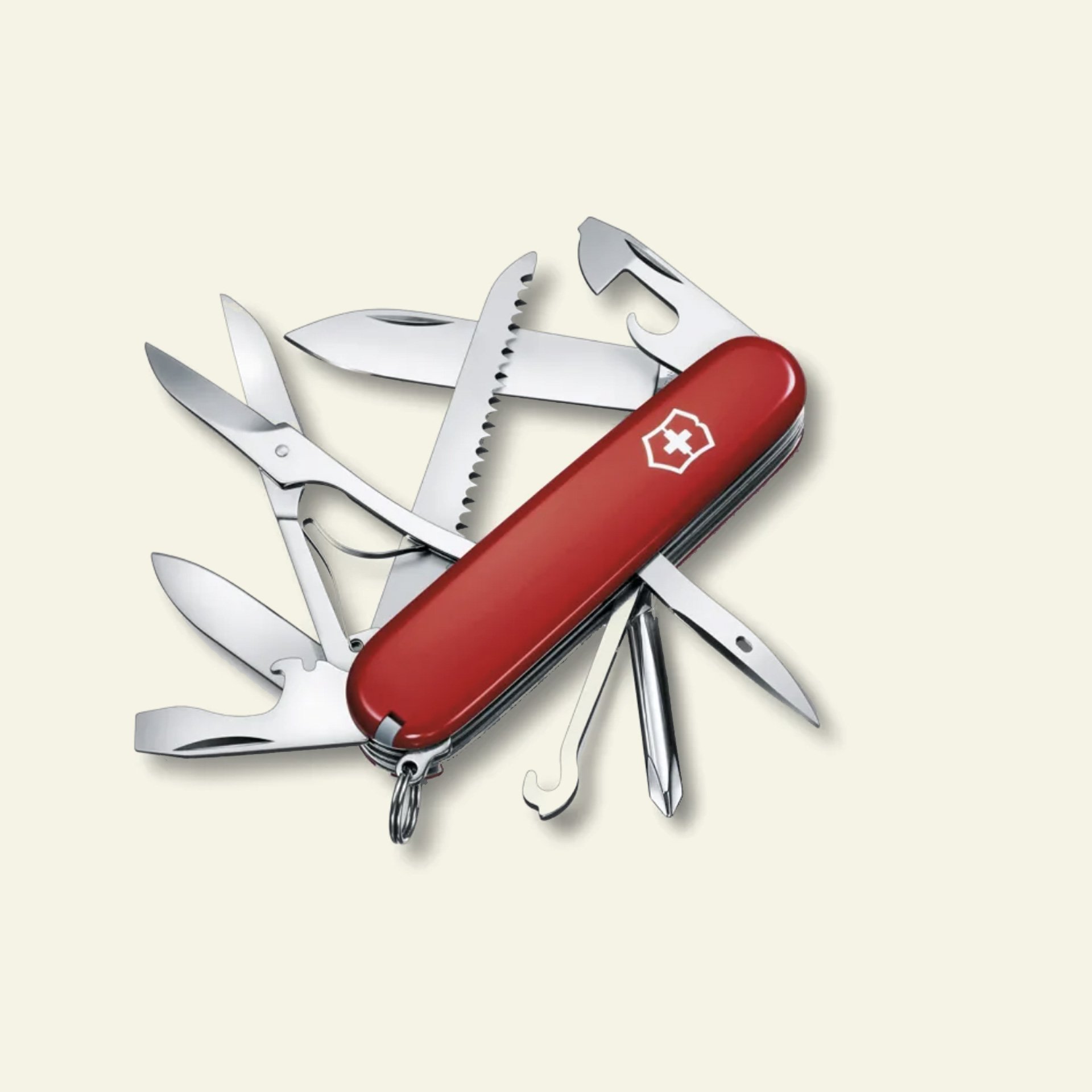
If your Scout has their Totin’ Chit they’ve been trained to safely use and care for a knife. A pocket knife is one of the Ten Essentials and a right of passage for many young men. A genuine Swiss Army knife will last a lifetime and get near daily use. We like the Fieldmaster model; it has all the tools a Scout will need (and no corkscrew).
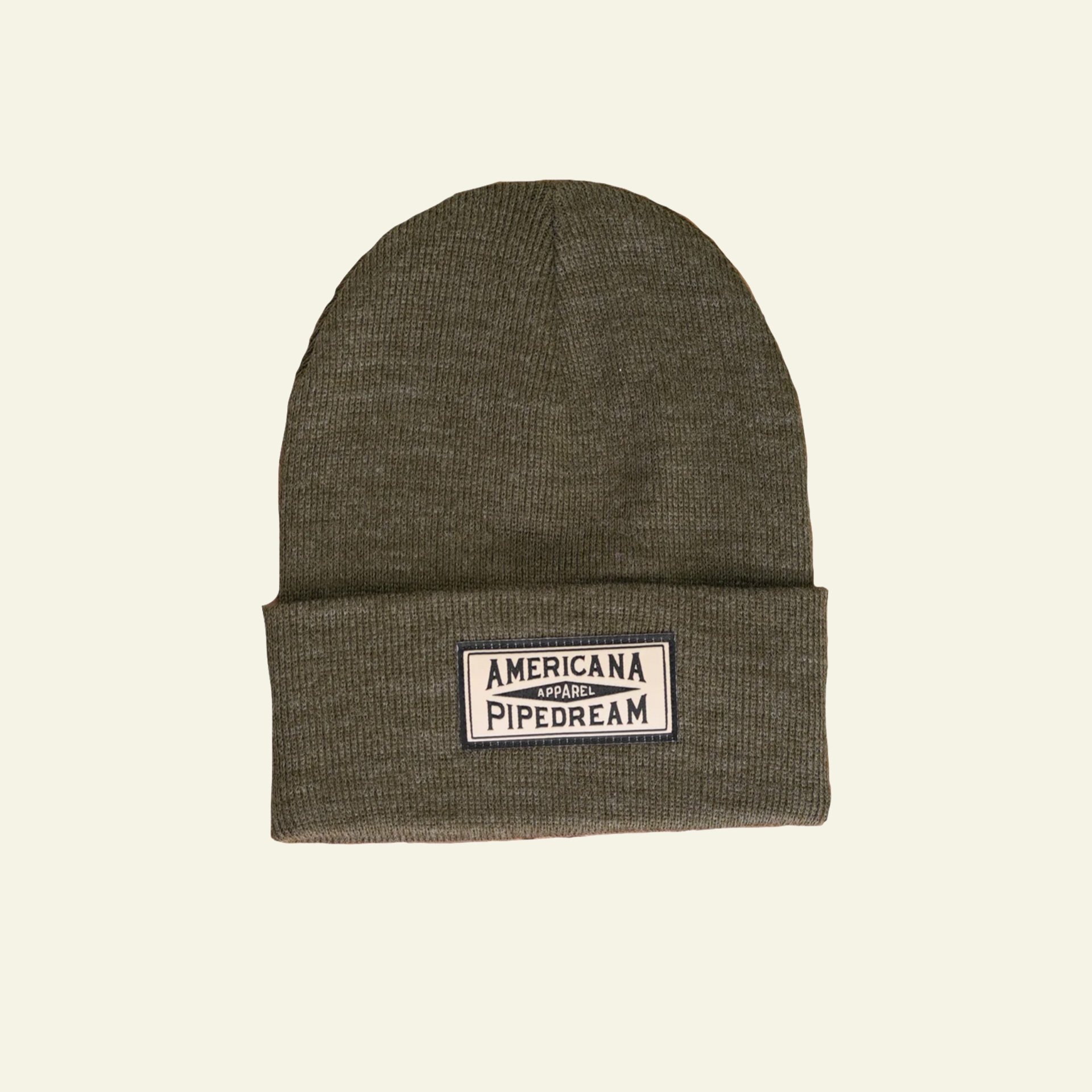
Apparently you can never have enough beanies. This one was suggested by our SPL, who likes the look, price, and that it supports an independent brand.
$15 from American Pipedream
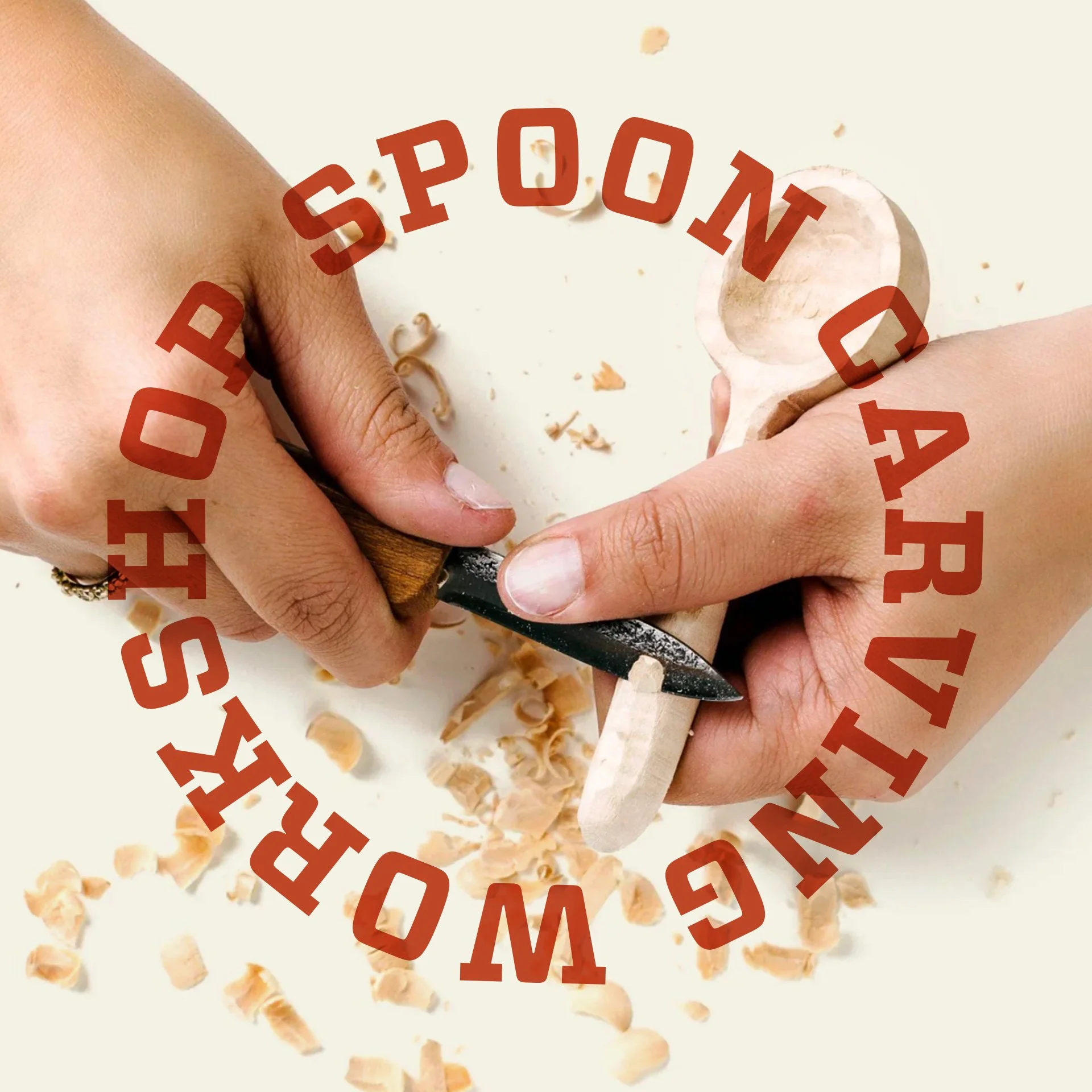
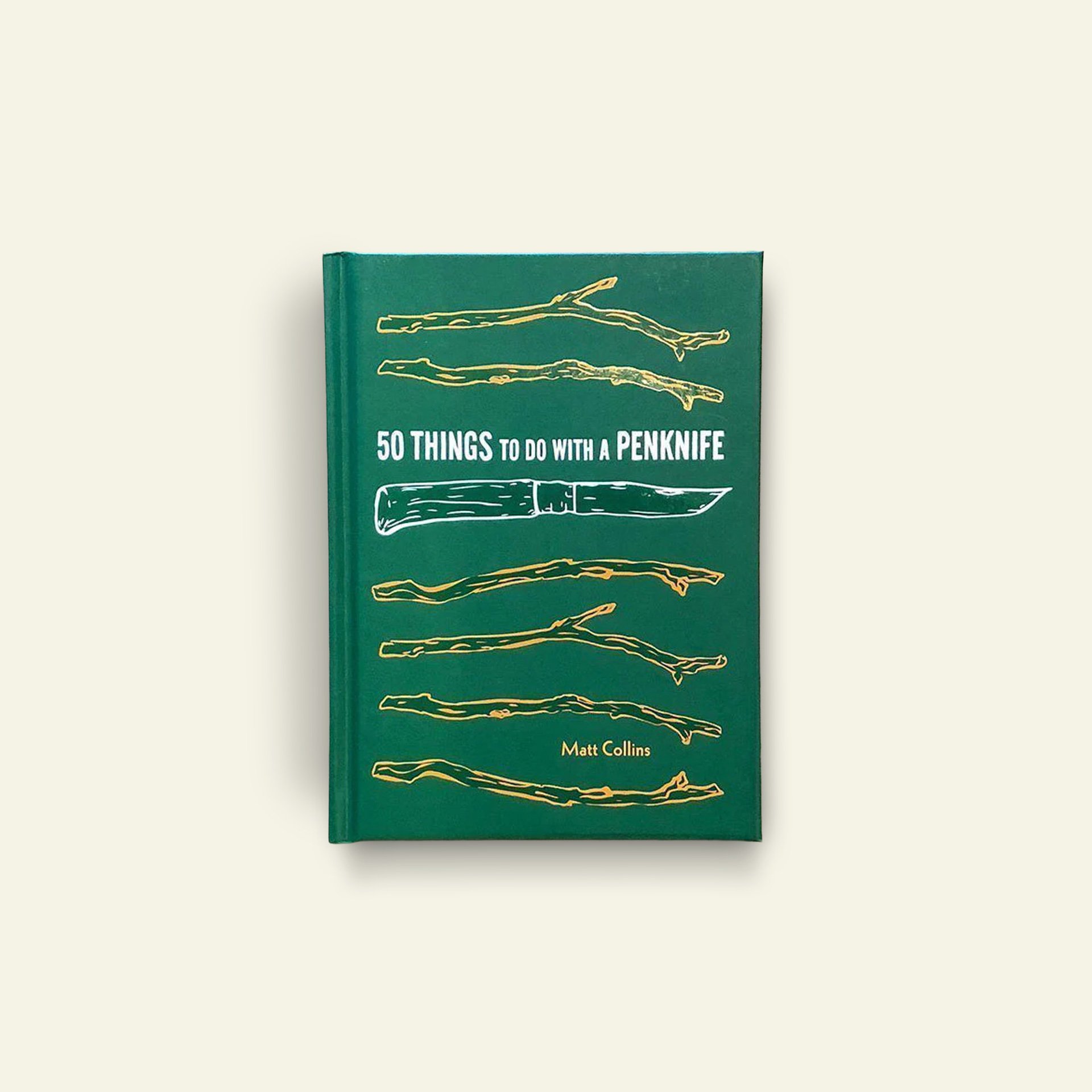
Whether beginner or expert, this guide to whittling has inspiring projects for all levels—from tent stakes to chess pieces to spoons, whistles, and detailed carvings and fruit tree grafts. With 50 creative, practical projects and clear step-by-step illustrations, it’s perfect for the adventurous Totin’ Chip holder.
$18 from Chronicle Books
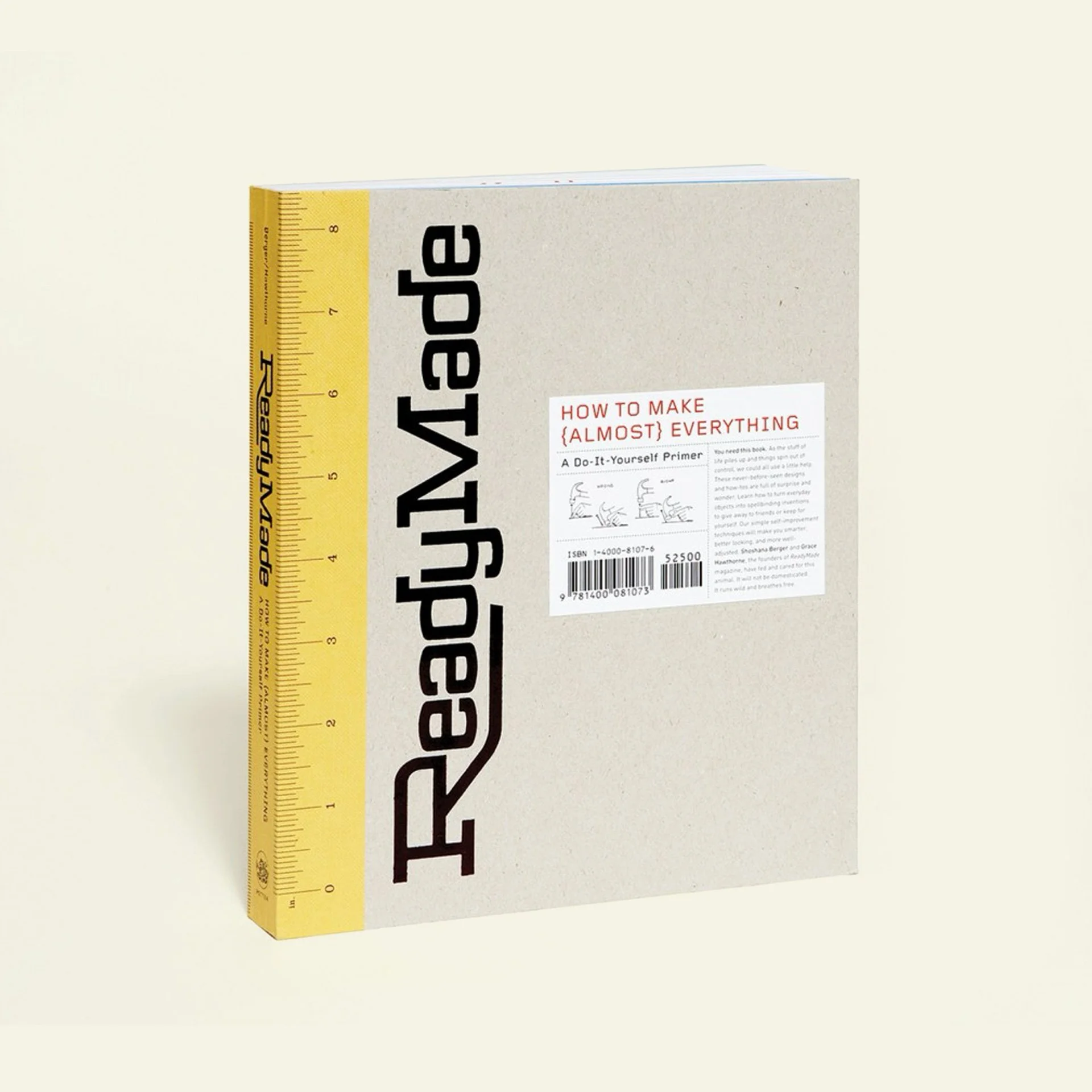
Beautifully designed by our friends at Volume, this is the book that ignited the DIY movement. Full of creative projects that reuse, repurpose, and recycle everyday objects into delightfully innovative new creations.
$6 from Abe Books
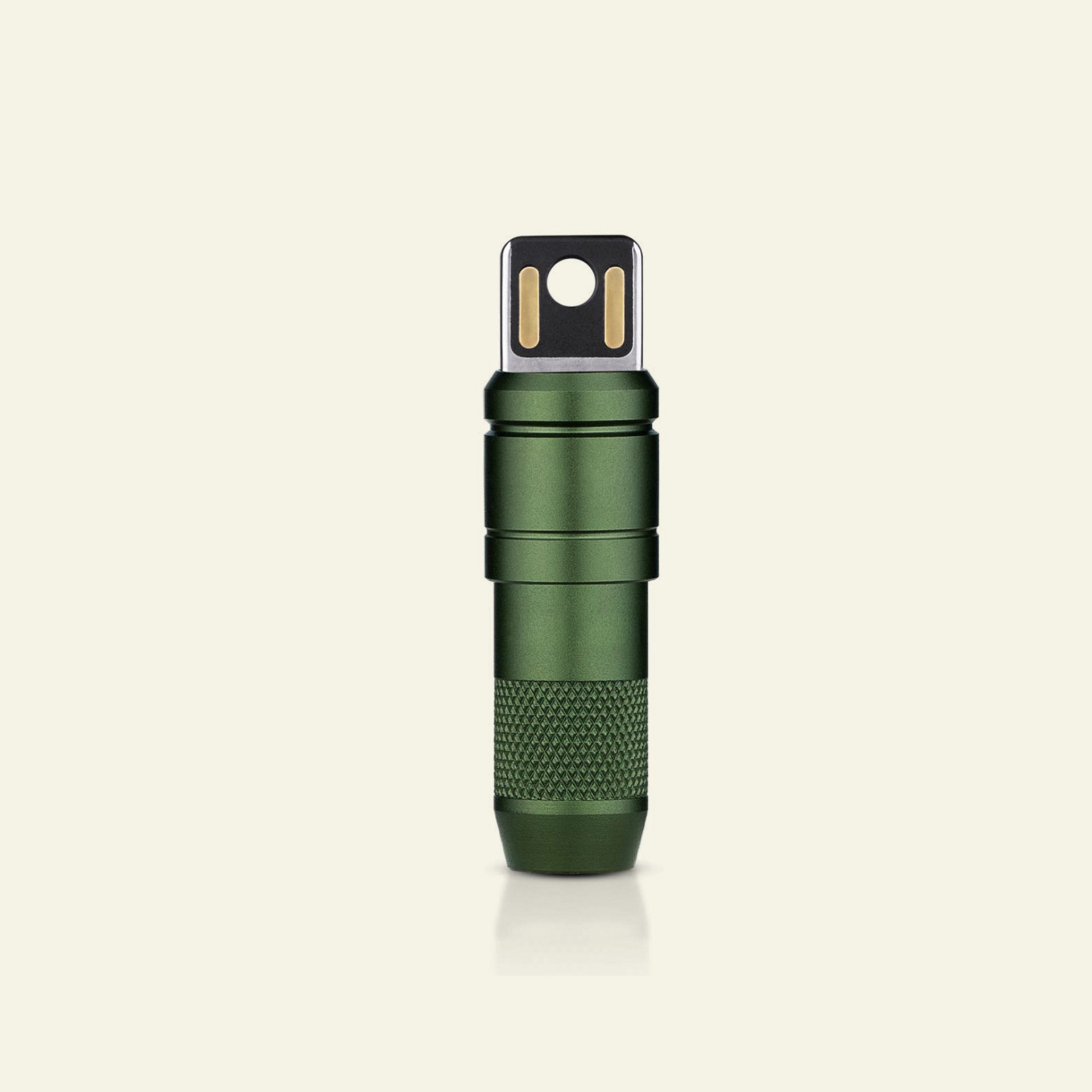
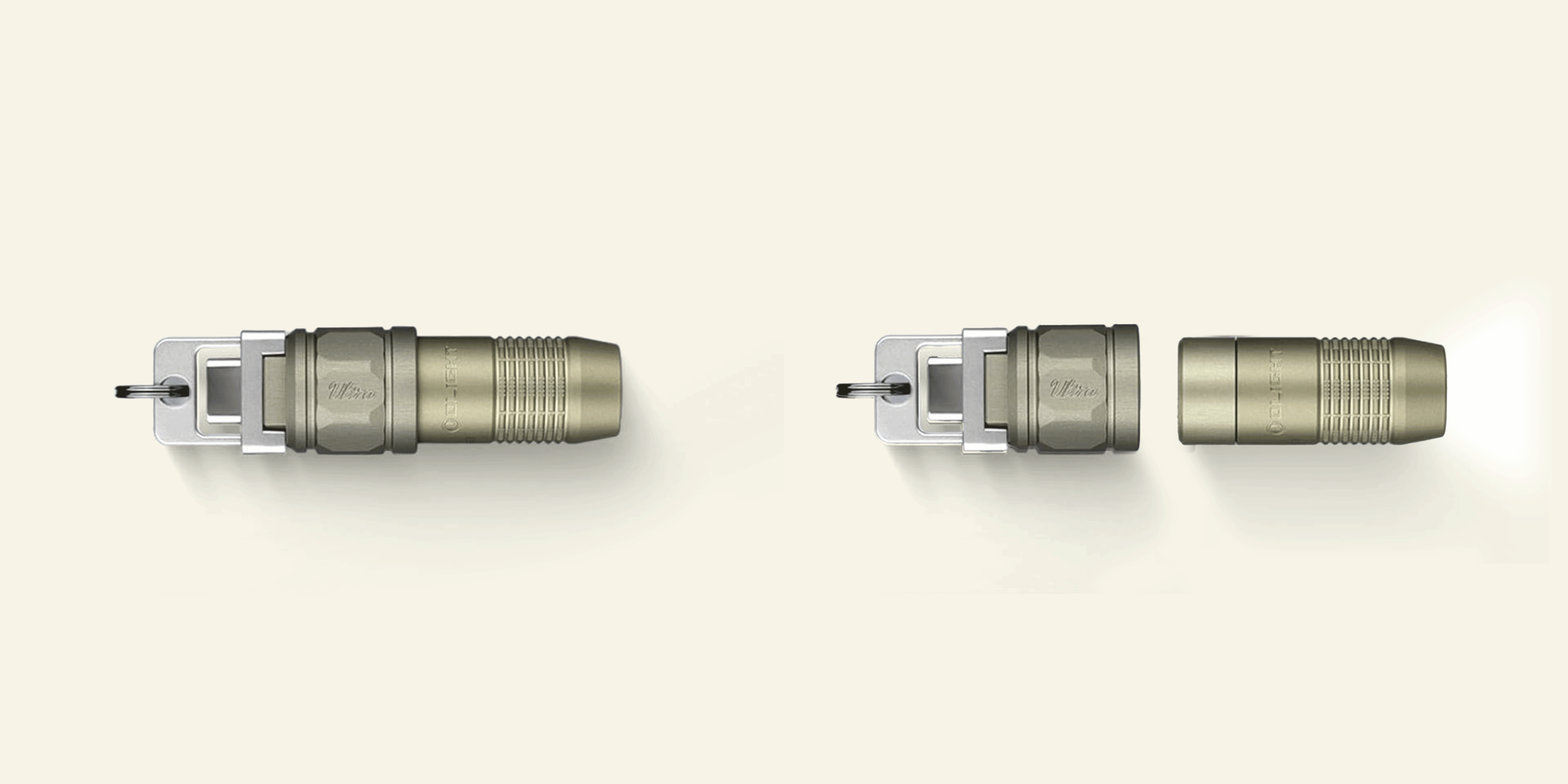
This compact, durable keychain flashlight illuminates instantly when detached from its magnetic cap, which is also a doubles as the light’s USB charger.
Whether you wear it ironically or proudly, this officially-licensed tee looks great. We also dig the US Forest Service Tee (in 333 colors!)
$25 at Hank Player
Suited for short hikes and daily use, this 22L daypack may be a better size and fit for some Scouts than our other troop favorite, the Osprey DayLite. It offers a balance of comfort and organization, has a breathable back panel, tuck-away hip belt, hydration sleeve, zippered side-entry pocket, tall bottle pockets, and exterior loops for attaching additional gear. The slip-out back pad also doubles as a sit pad.
$60 from REI
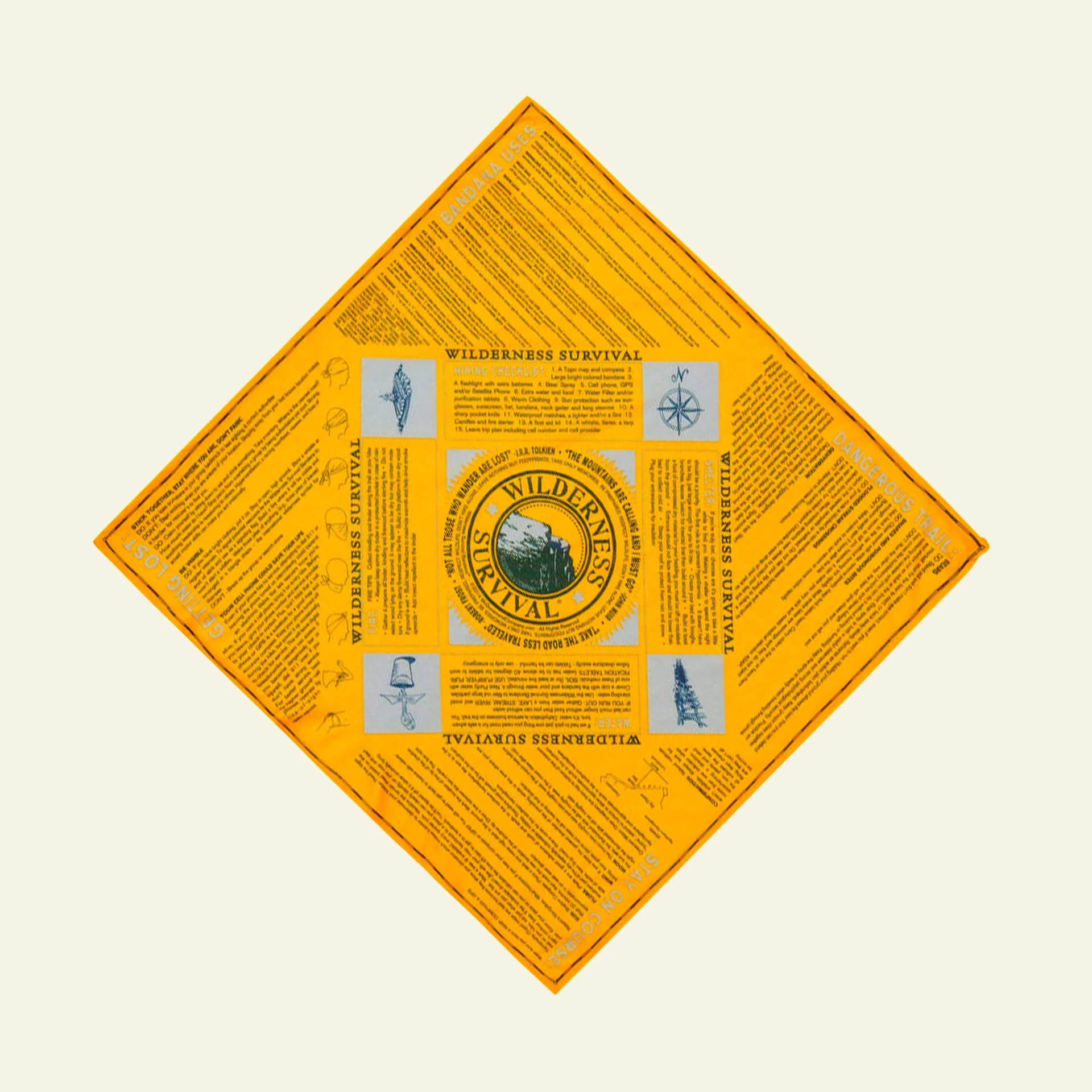
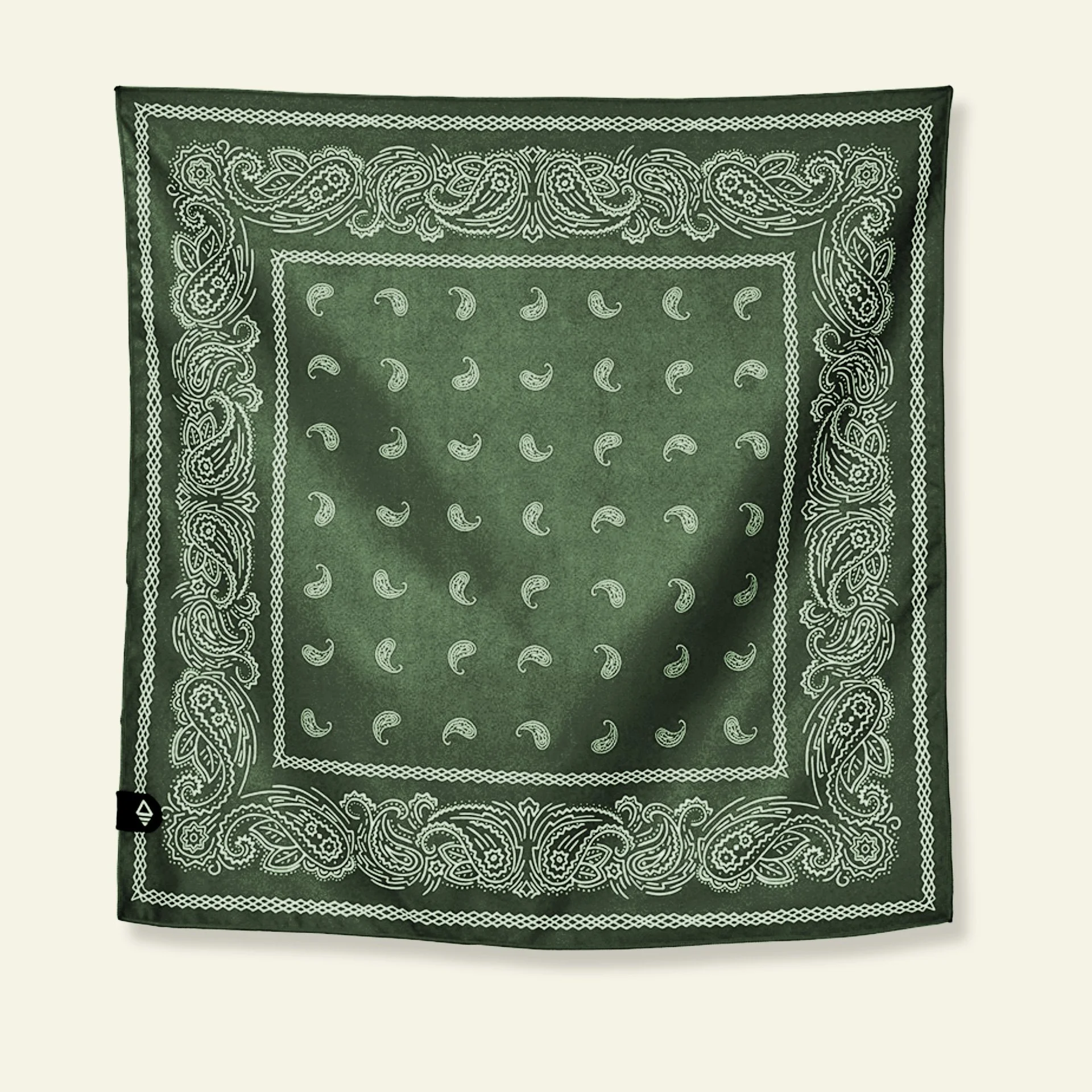
This soft, stretchy, 35 SPF bandana is quick-drying, odor-resistant and has so many facts printed on it that you’ll learn something new every time you wear it. There are also larger versions, suitable for also using as a sling, and more illustrated designs.
You’re not going to find a lot of tech on our list, but we know a lot of our Scouts are wearing Apple watches now. Keep your device protected with this affordably-priced, attractively-designed, all-in-one case and strap.
$29 from UAG
Learn the best knots for outdoor adventures with Know Your Knots. This practical knot-tying kit includes 30 easy-to-learn flashcards and two 2-foot-long practice ropes.
Did you know that the boysenberry pie at Yosemite National Park has been made the same way for the last 60 years? All over the US, national parks have signature food offerings. This cookbook collects more than 70 of those recipes, inspired by their iconic lodges, landscapes, and chefs. Makes a helpful nudge for Scouts needing to complete requirement 4 of their Cooking merit badge, or cooking requirements for Tenderfoot, Second Class, or First Class.
$26 from Powell’s
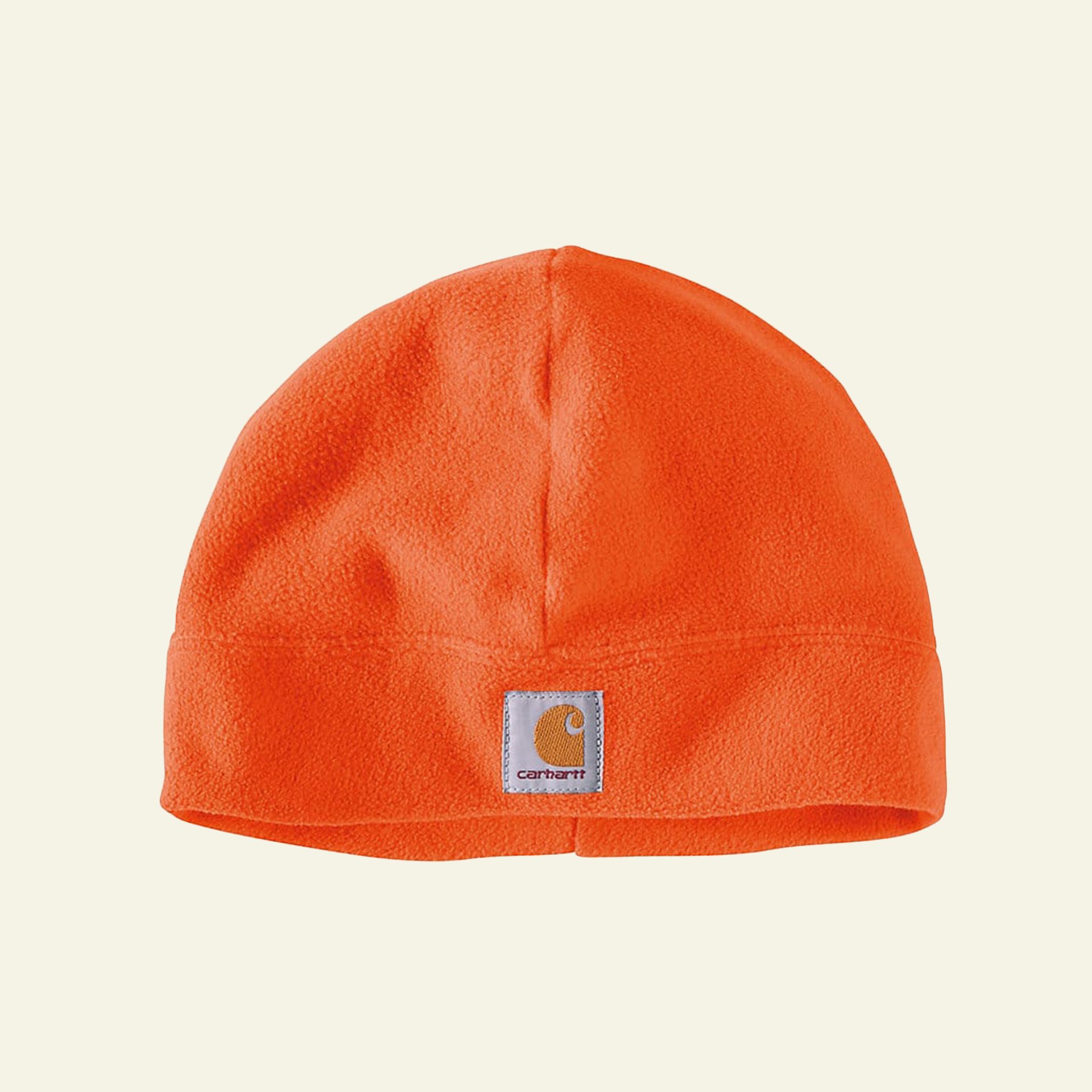
We like the low profile, bright orange version as actual performance gear in the field. Your Scout may prefer the trendy cuffed beanie in Carhartt’s signature tan. Amazon also has the cuffed beanie in orange.
$19 from Carhartt
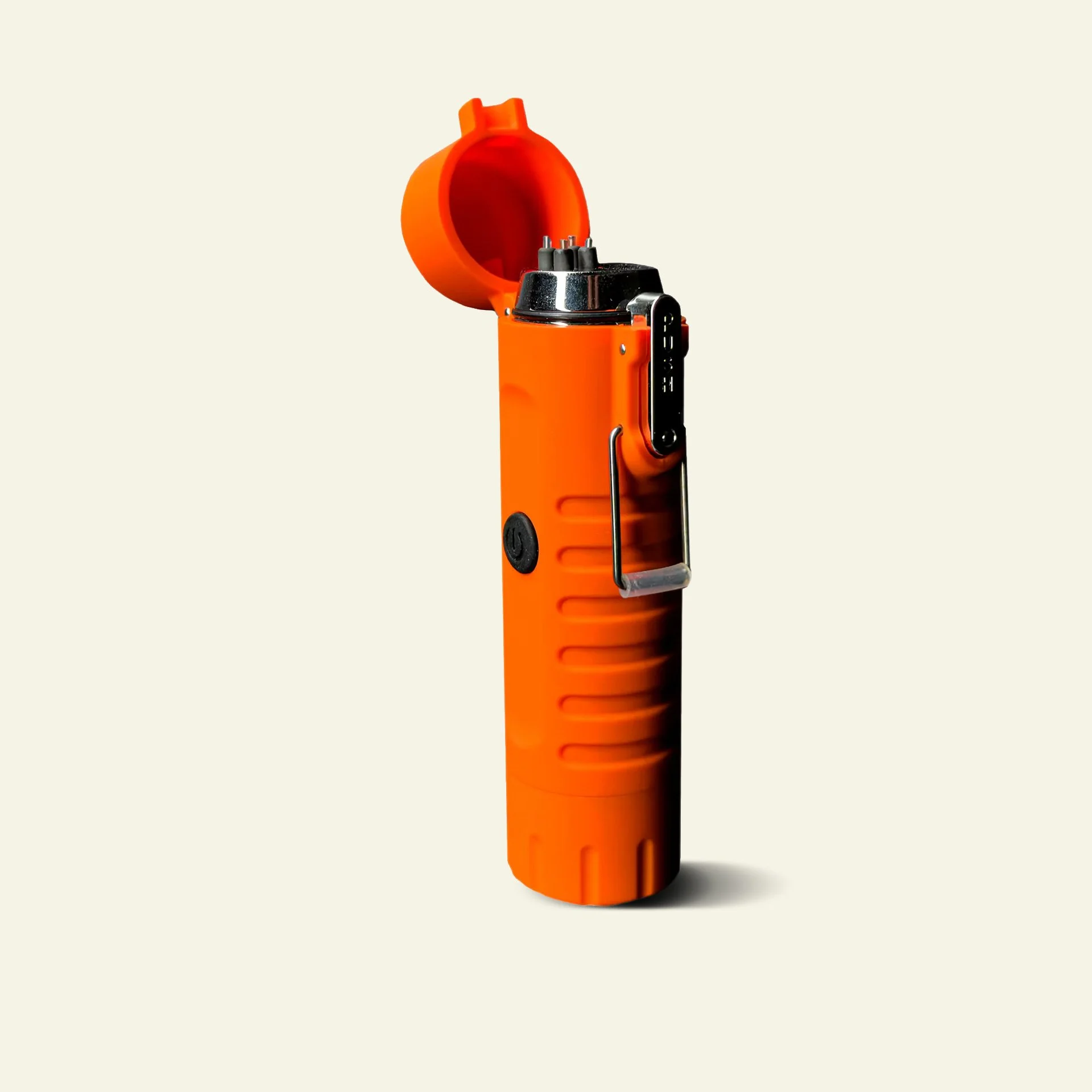
This rechargeable, waterproof, plasma lighter and flashlight is two of the ten essentials in one. Firem’n Chit required.
$19 from DarkEnergy
It’s the EDC light that’s all over TikTok and Instagram. It’s compact, rugged, rechargeable, has a 180˚ degree rotating head, enough diall, switches, and toggles to give it a satisfying, gadgety feel.
$19 from Wuben
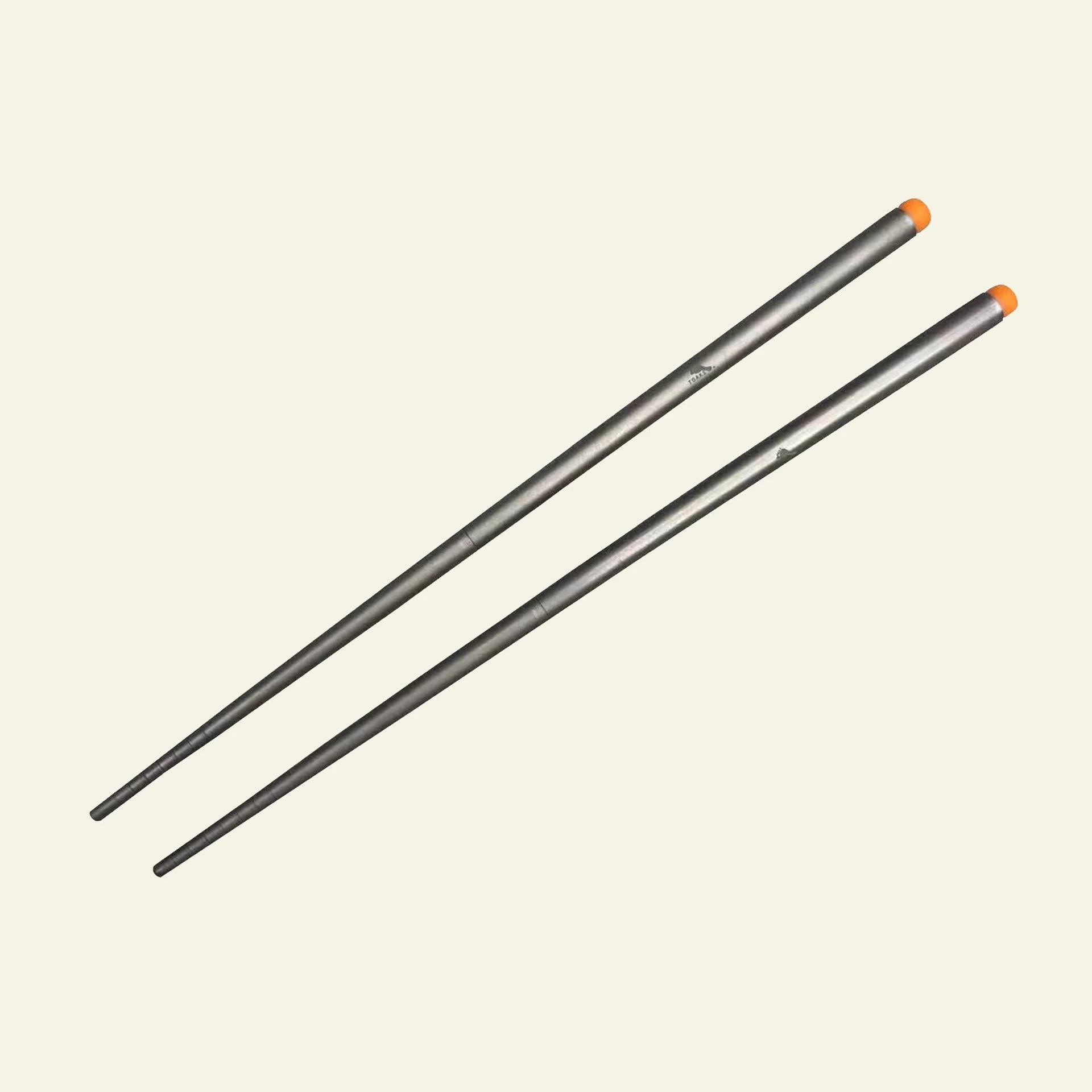
The spork may be the ubiquitous outdoor eating tool, but these ultralight, collapsible chopsticks are a great alternative for everything but your soupiest meals.
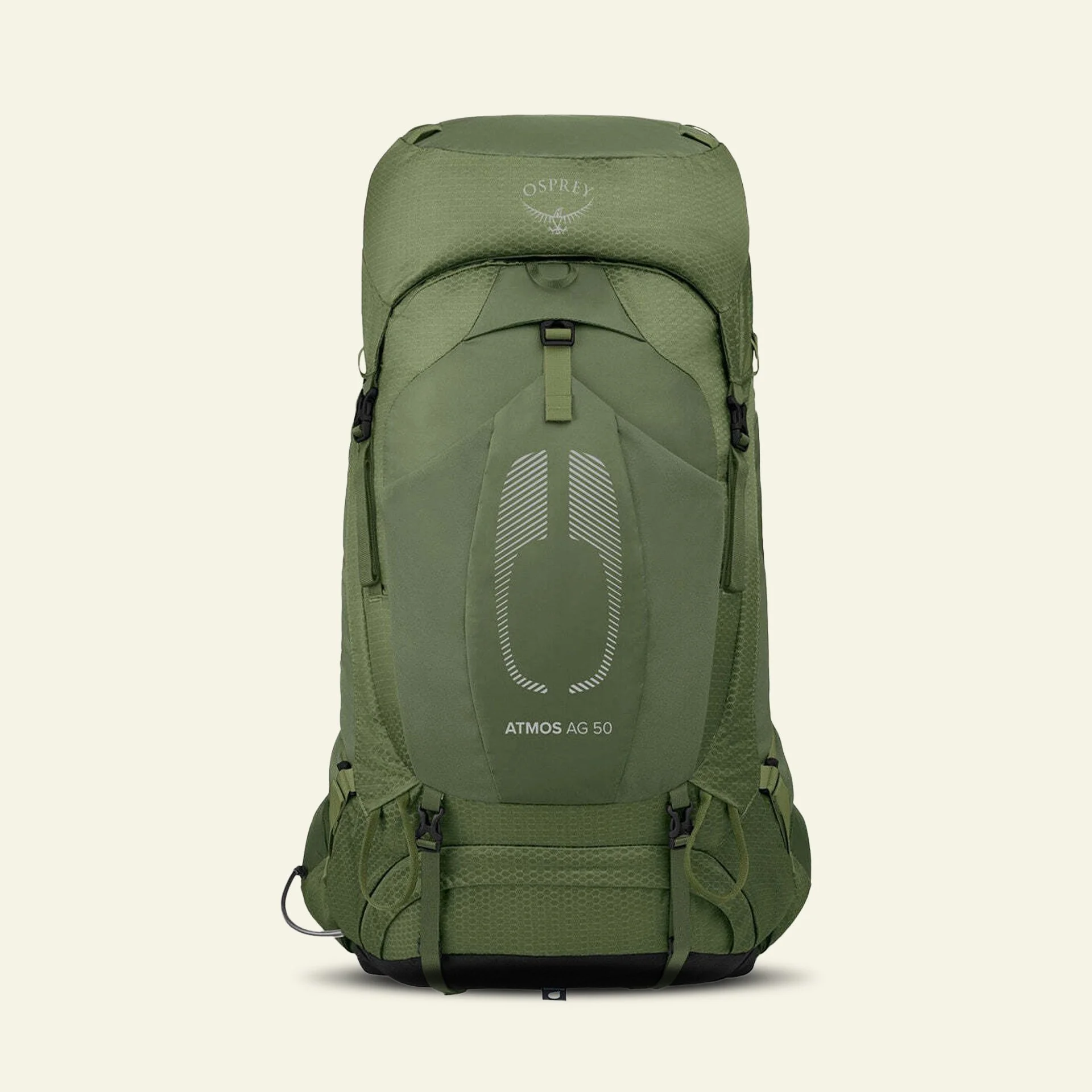
The right pack can be the difference between an enjoyable trek and a laborious one. Troop 333’s High Adventure Trekkers like the lightweight Osprey Atmos AG 65 for its capacity, organization, and ultra-comfortable suspension. Younger or smaller Scouts will probably do better with the The experts at REI can help you select the right pack for your size and activity. It’s best to get fitted in person, but if you know a few critical measurements they can help you out.
$315 at REI
Scouts need a way to start fire on any wilderness outing or camping trip. Waterproof, windproof matches in a watertight case are a reliable way to do that. This inexpensive set is highly-rated and includes some tinder and extra strike pads (stored safely inside). Tip: fill a second, empty case with regular matches to save your pricier stormproof ones for an emergency.
Every Scout should have and know how to use a compass. The most useful design is one with a clear baseplate and ruler. These are the easiest to use with a map, they’re slim, and they’re durable. A small button compass or one that is basically an add-on to another tool is a good backup, but just not practical for typical use.
Quality rain gear should be waterproof, breathable, and durable. It shouldn’t necessarily be expensive. You can easily spend $300 and up for a good, technical jacket, but there are sensible options for half that, half that, and half that. REI Co-op and Columbia are two reliable brands; each offers jackets for about $80. For growing kids, you might consider Frog Toggs, an ultra-cheap brand that swirls up fierce debate among hiker’s of the Pacific Crest Trail.
Made from lightweight microsuede, the Nomadix Bandana towel isn't your average bandana. It's a sweat absorber, sun shielder and mess cleaner upper (for long days (or weeks) outside. Bandanas have a multitude of uses, including water pre-filter, dust mask, tourniquet, trail marker, bandage, sling, sweatband, wash cloth, pot holder, signal flag, makeshift hat, towel, fire building tinder, ankle wrap, cold compress, improvised bag, and more…
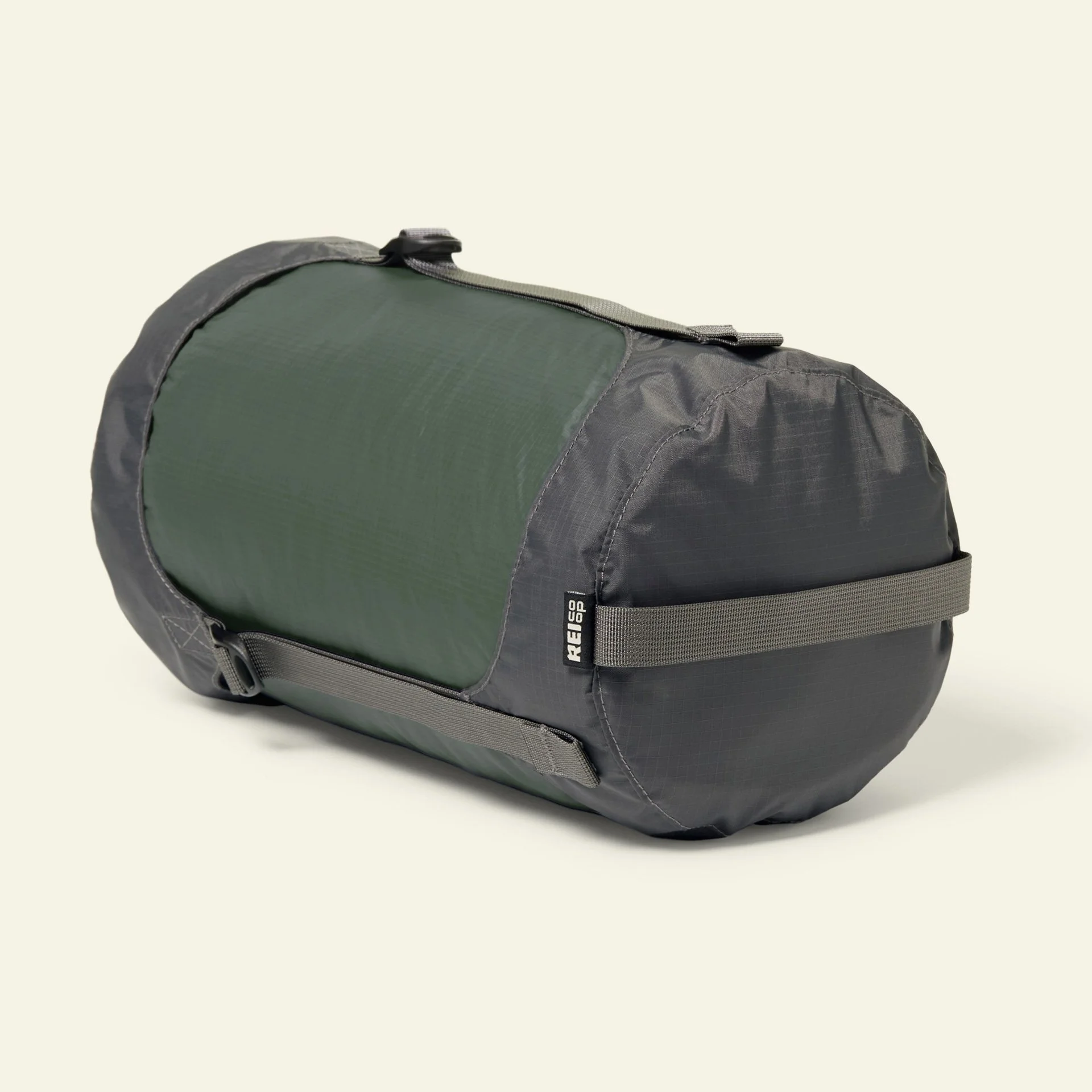
Compression sacks help organize gear and keep it compact—essential for longer treks. Most Scouts are familiar with using these for sleeping bags, but they can be used for clothes as well. Keep dirty clothes separate, an emergency base layer set dry and handy, or that insulator compact and stowed away until it’s needed.
The right base layer can help keep a Scout dry, warm (or cool), and better smelling. Wool is by far the best choice. Silk and synthetics work too. Base layers should be close-fitting (their job is to wick moisture and provide insulation next to the skin). Smartwool and Patagonia are top-rated but pricey brands. REI’s Midweight line is a more affordable and high-performing option. Because younger Scouts will outgrow their clothes quickly, we recommend Uniqlo’s Heattech line. It gets favorable reviews from many experienced backpackers.
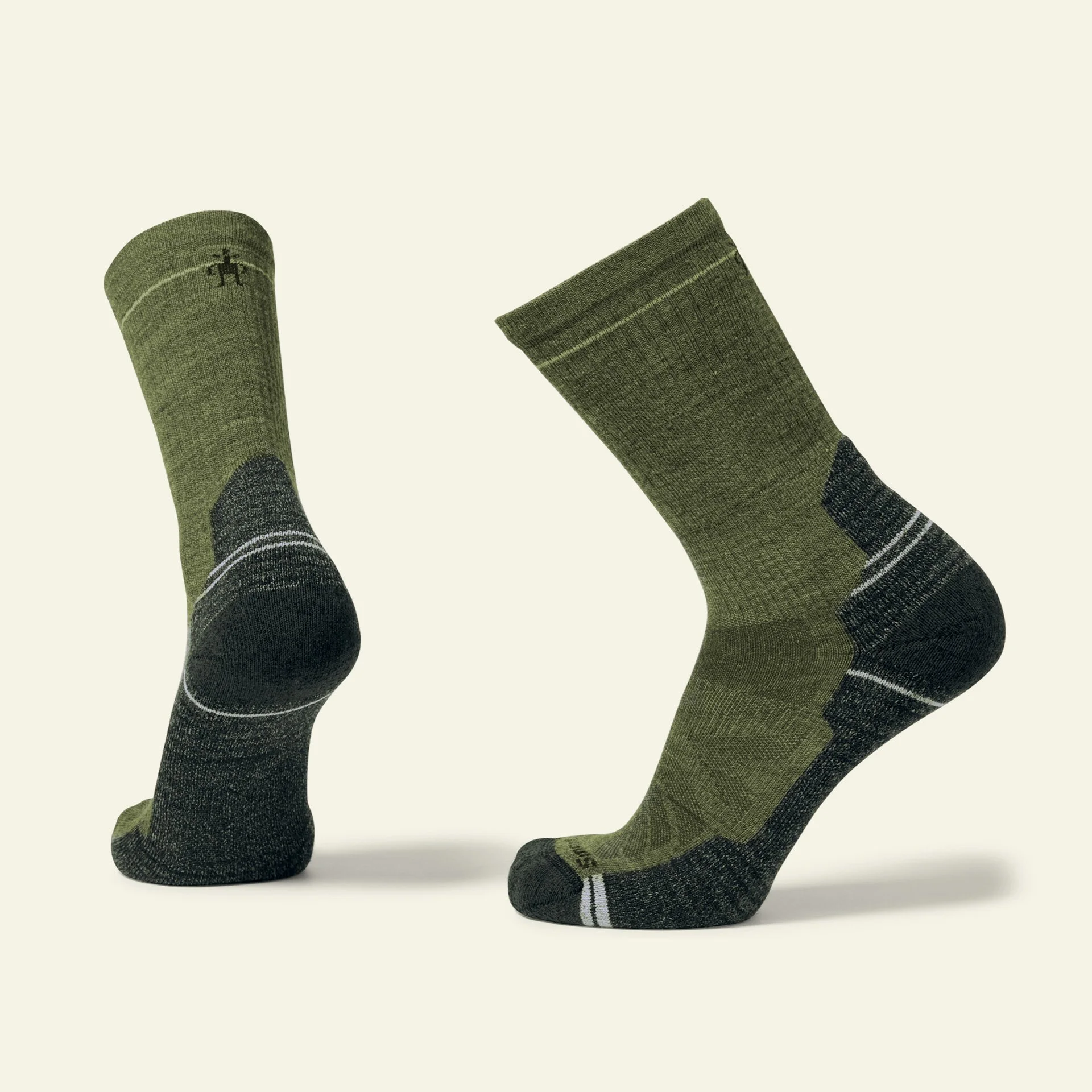
Yes socks. They may not be exciting, but a backpacking adventure is—and nothing will ruin that faster than cold feet or blisters. Quality wool socks will help take your Scout far. Wool is naturally moisture wicking and anti-microbial. They can be worn for days without smelling or irritating, and they’re quick-drying so you can wash them on the trail. Smartwool is one of our tried and trusted brands. Darn Tough socks live up their name and have an unbelievable lifetime warranty.
$25 at REI
The best first aid kit is one a Scout assembles themself, but for readymade kits one of our favorites is the Adventure Medical Kit .7 ultralight. It’s compact, lightweight, and waterproof. We’d recommend adding in an Ace Bandage, some electrolyte packs, and some Steri-Strips to round it out. The smaller .5 version is a solid choice too. The vintage first aid kit pictured here isn’t practical for actual outdoor use, but they make cute desk accessories for the Scout in your life and can be found on ebay.
Headlamps are great alternatives to flashlights, leaving your hands free to for other tasks like cooking, carrying trekking poles, etc. Black Diamond and Petzl are two quality brands. Black Diamond’s Astro 300 is a bargain at $20. As you go up in price you’ll get brighter lights and more features—like rechargeability and night vision saving red light options.
Tip: Opt for an orange casing and headband to make your headlamp easier to find in your pack
A Scout should have pen and paper on them at all times. This compact, highly visible, waterproof pen from Rite in the Rain should be staple in any pack.
$7 from Rite in the Rain
Safe for tents, lightweight, and sustainable, these slim, collapsible lanterns are convenient—but not essential—upgrade to your camping experience. And they let you save your more powerful battery-powered lights for when they’re really needed.
One of the 10 Essentials. Nalgene brand water bottles are cheap and durable. They come in a range of colors, have tethered caps that won’t get lost, measurements on the side to make cooking easy, and a wide mouth for easy filling. They can even be personalized. If your Scout is a minimalist, their Ultralite line is one of the few times an ultralight version is cheaper than the standard version.
Though not officially one of the Ten Essentials, a reliable watch is an indispensable tool on any outing. They work after your phone runs out of juice and can be used to help calculate distance, note the time of an injury, and just generally stay on schedule. In an emergency, an analog watch can be used as a compass. Timex’s Expedition watch is a solid option—with a secure NATO-style band and water resistance to 50 meters.
Kids love hammocks. At summer camp, some of our Scouts set up hammocks inside their platform tents. Our Scoutmaster camps in a hammock shelter whenever possible. Ultralight hammocks can be expensive (and to camp in one you’ll want an under quilt), but the Covacure Double Hammock can be found online for around $25 and is a great choice for 1st and 2nd Class Scouts.
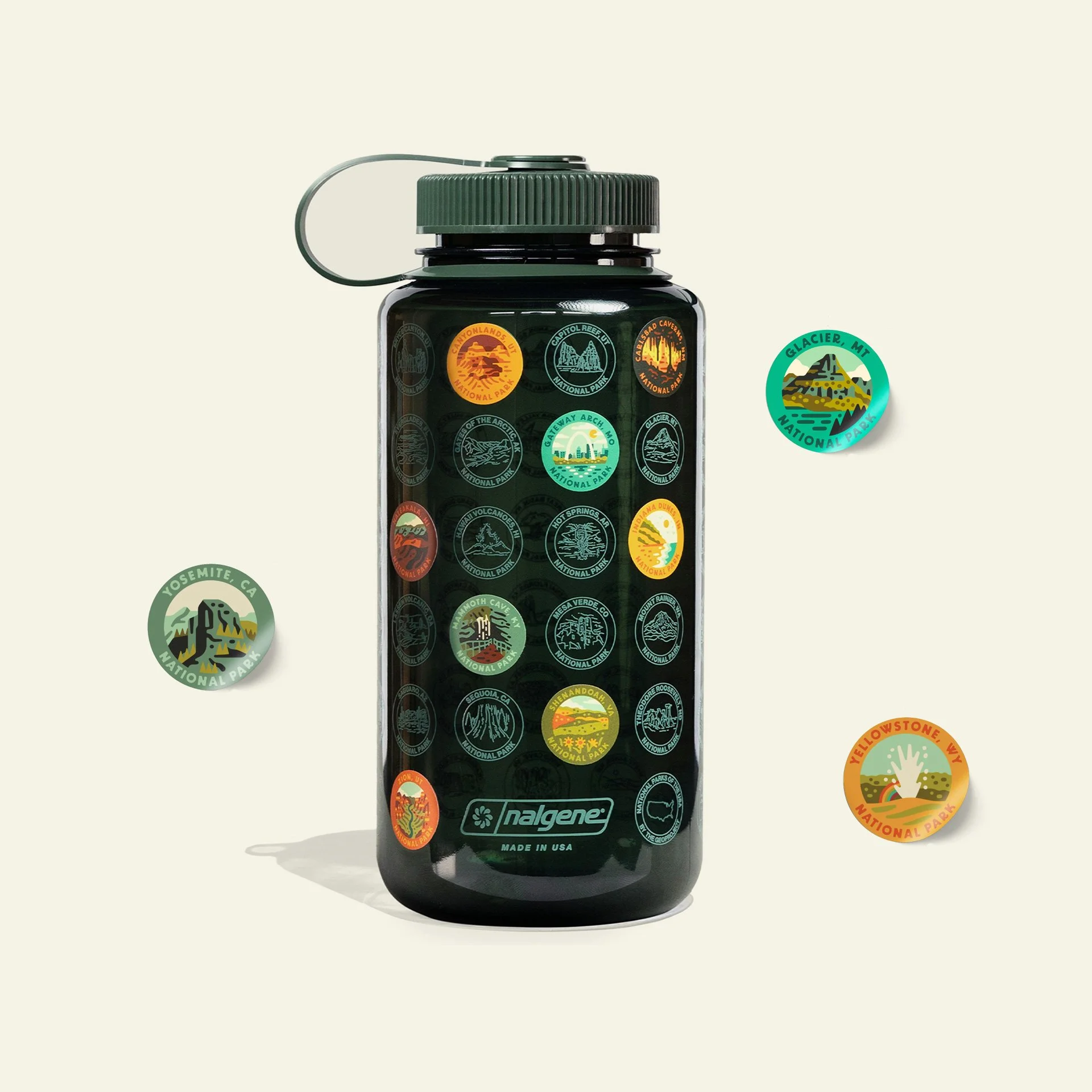
Nalgene brand water bottles are cheap and durable and the default vessel of most hikers and campers. the 32 oz size holds enough water for an average 5-6 mile hike, but Scouts also use them as containers for survival kits and nighttime sleeping bag warmers. This special edition version Includes 63 durable, water-resistant, national park stickers by artist Erikas Chesonis, which can be used to keep track of your bucket list national park visits.
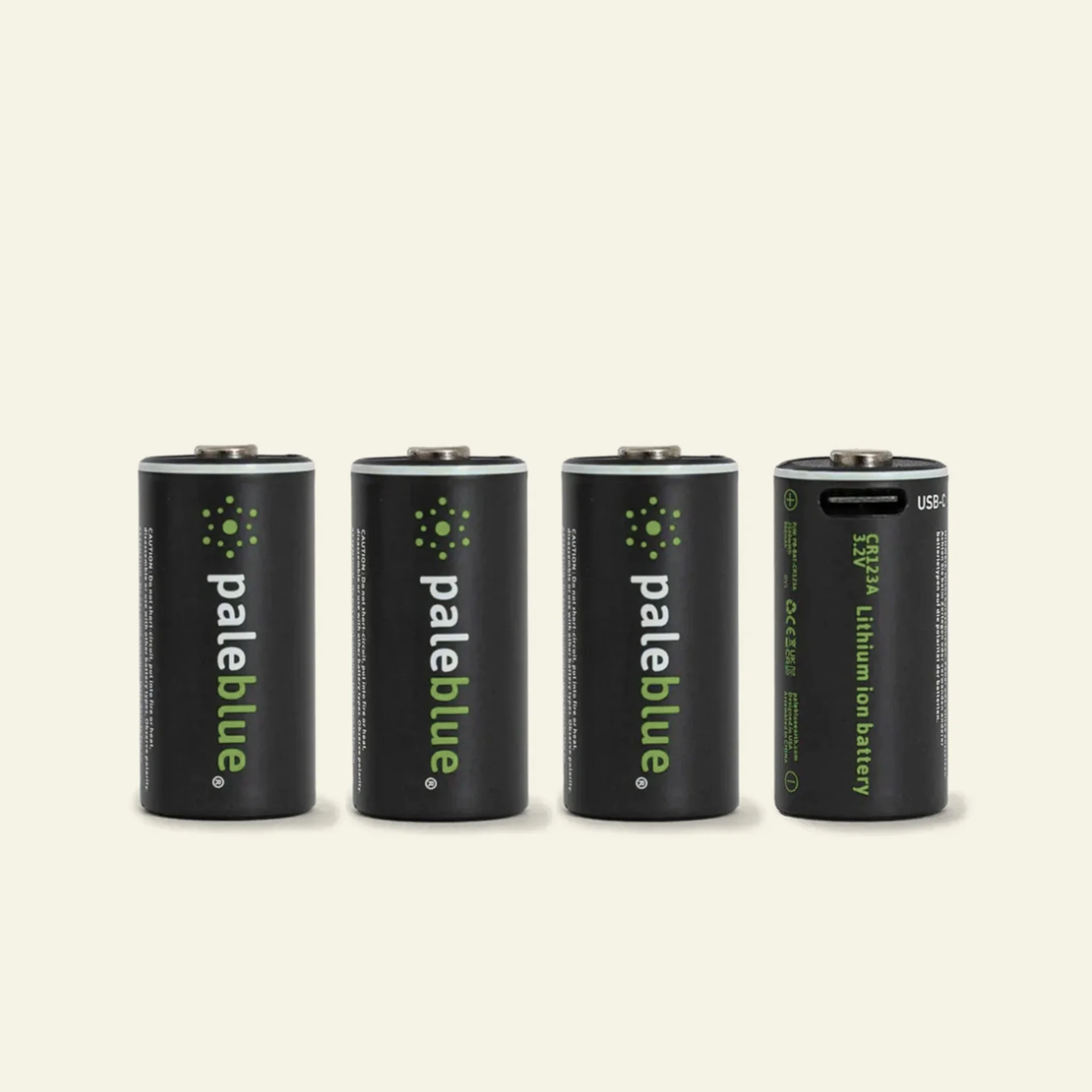
Replace your standard batteries with these eco-friendly USB rechargeables.
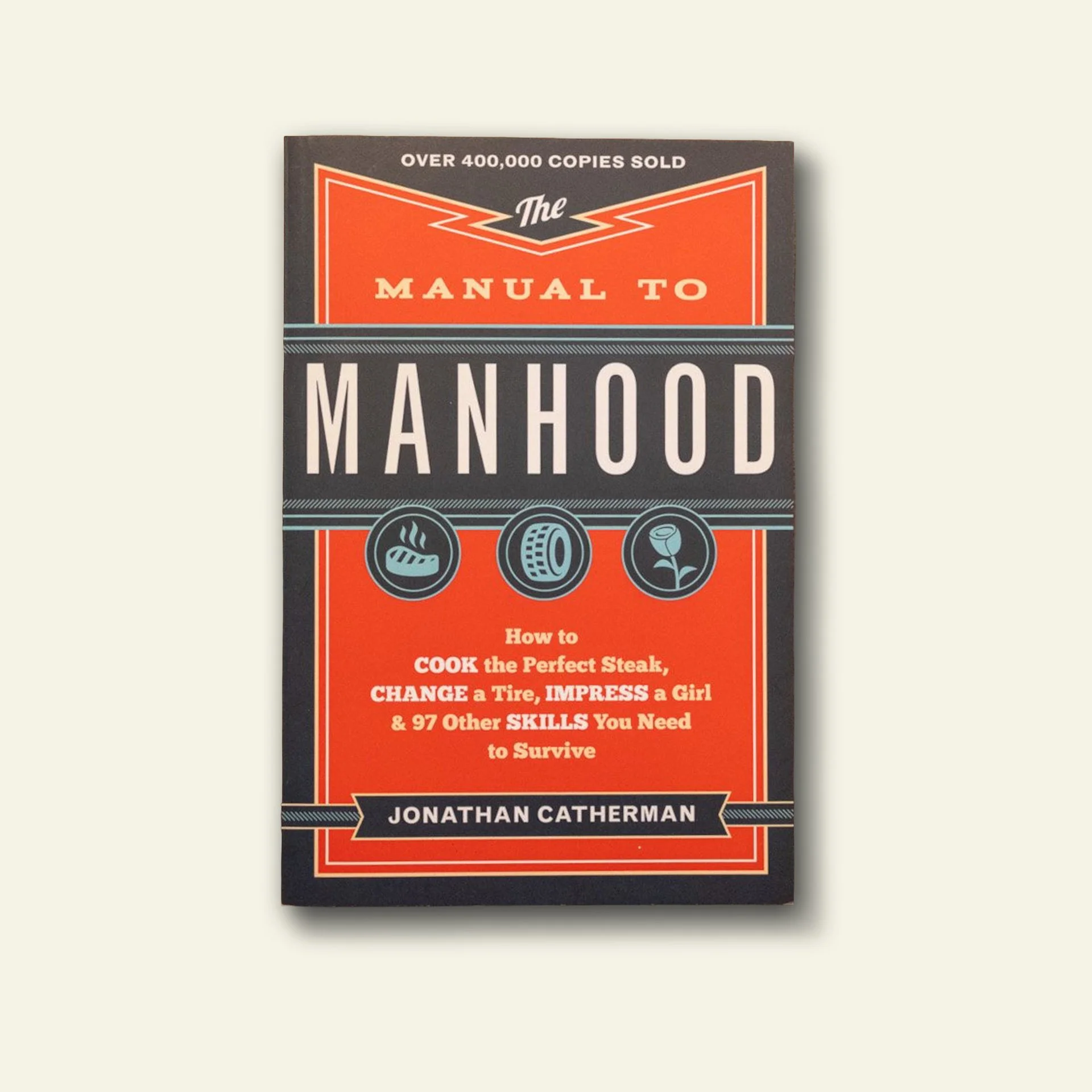
How to equip your toolbox, change a tire, shave, grill, start a healthy diet, make new friends, cast a fishing rod, get out of an argument, tie a tie, write a thank you note, etc. Note that this book also includes advice on how to mix a cocktail and other topics that are not usually discussed in Scouting.
$16 from Amazon
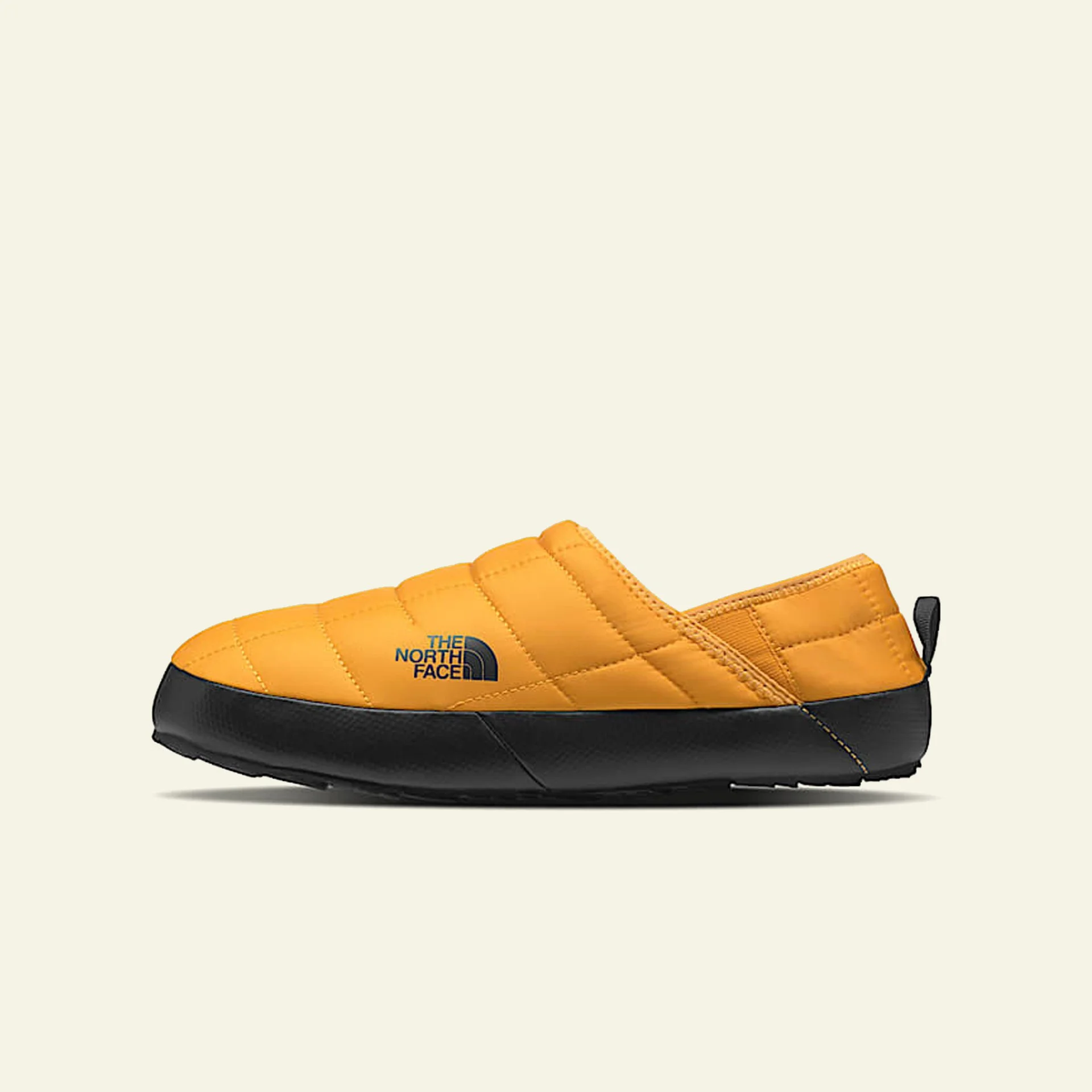
When backpacking, having a second pair of shoes to wear around camp will change your life. These lightweight, quick-drying, super-packable slip-ons have enough protection for camp life and short walks, and water crossings. For a cozier (but bulkier and less versatile) option, check out The North Face’s Traction Mules.
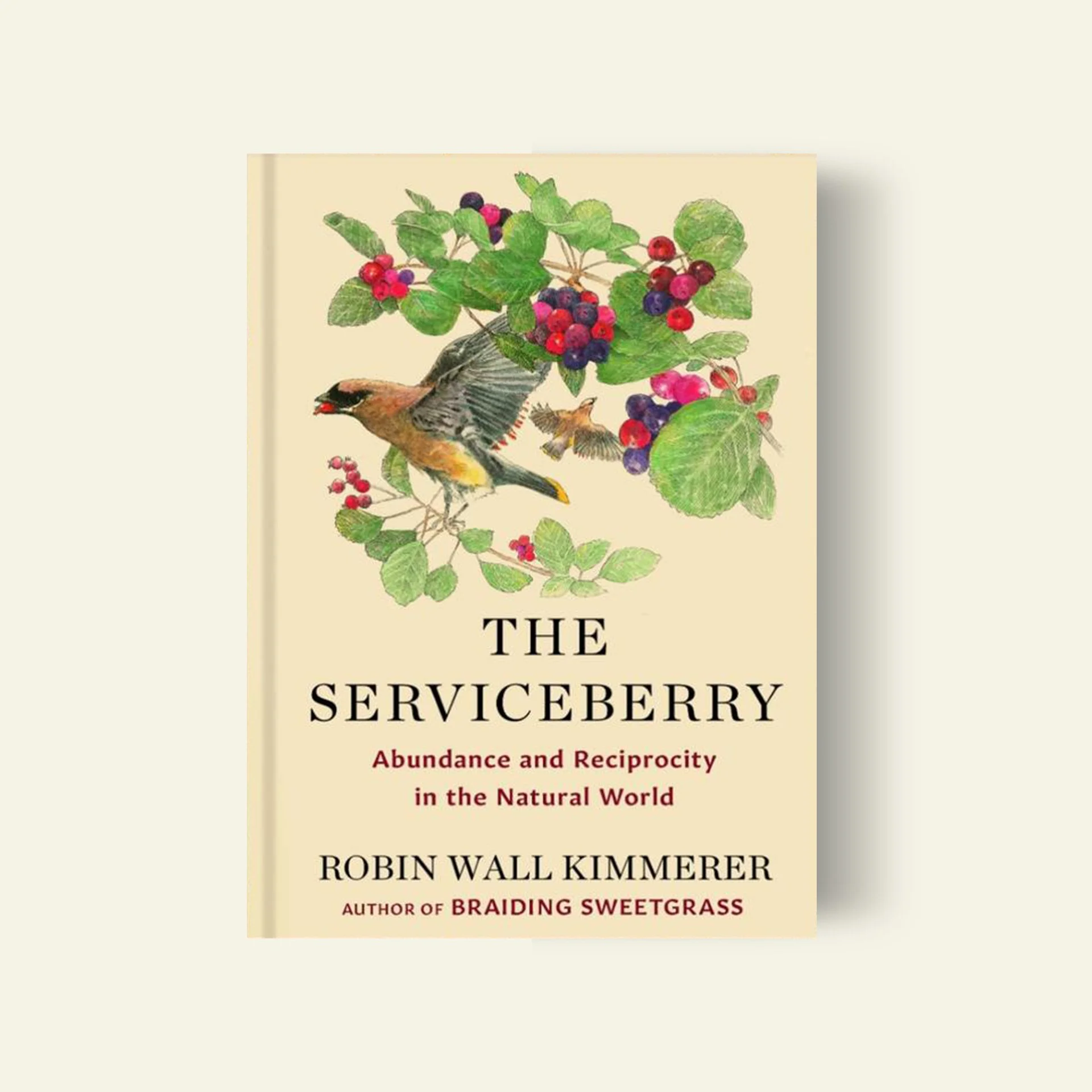
Our economy is rooted in scarcity, competition, and the extracion of resources. Indigenous scientist Robin Wall Kimmerer offers an alternative vision for how to orient our lives around gratitude, reciprocity, and community, based on the lessons of the natural world. Her model is the serviceberry, a tree that distributes its abundance of sweet, juicy berries to meet the needs of its natural community and ensure its own survival.
$14 from Thrift Books
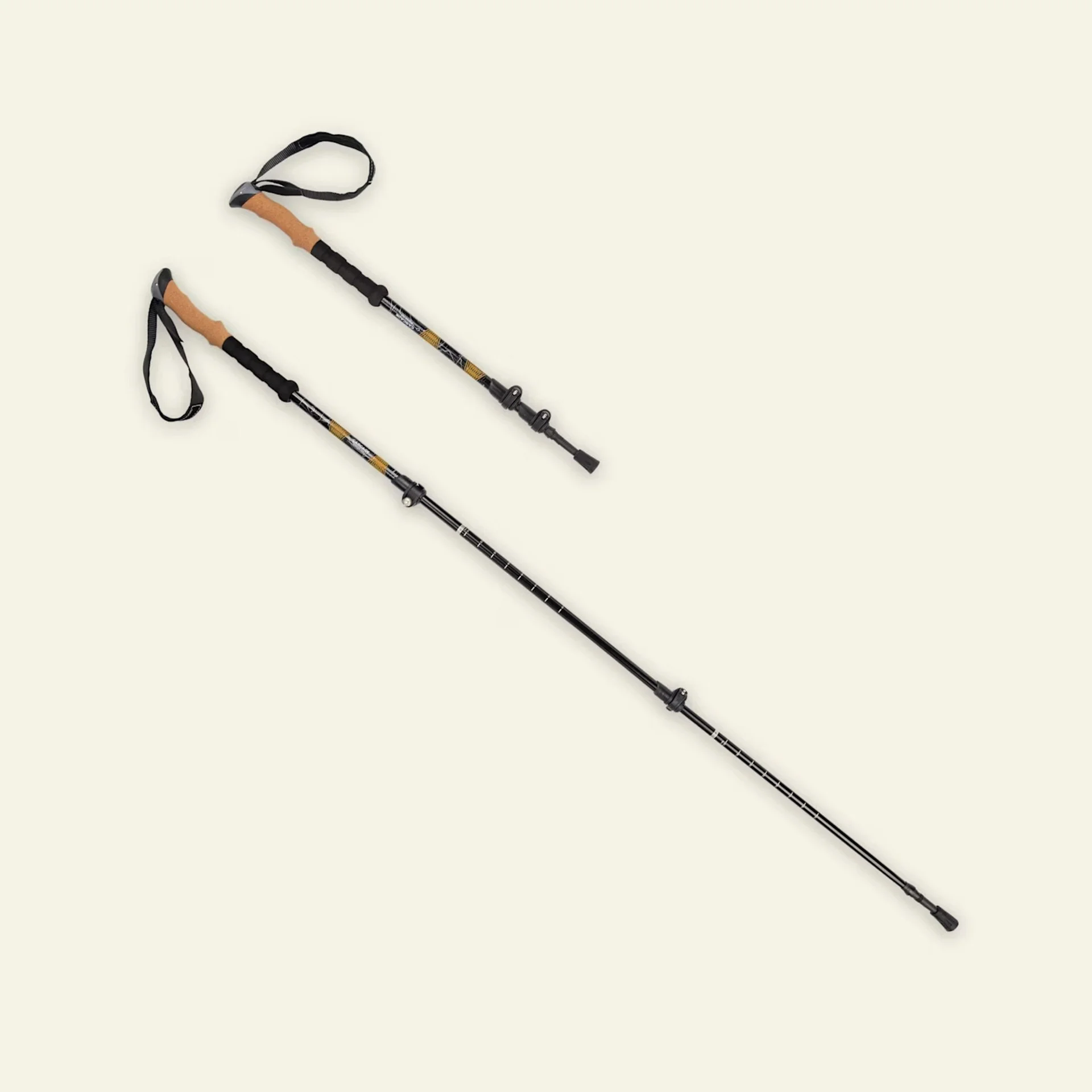
On backpacking trips and even shorter day hikes, trekking poles are becoming more an more popular in the troop. They offer stability on uneven terrain and increase endurance overall. On downhills, they make life easier on your joints. On uphills, they make ascents feel easier. Quality poles can easily approach the $200 rang. Black Diamond has quality poles for around $65, but this $30 option from Cascade Mountain Tech gets solid reviews from serious backpackers.
$29 from Bass Pro Shop
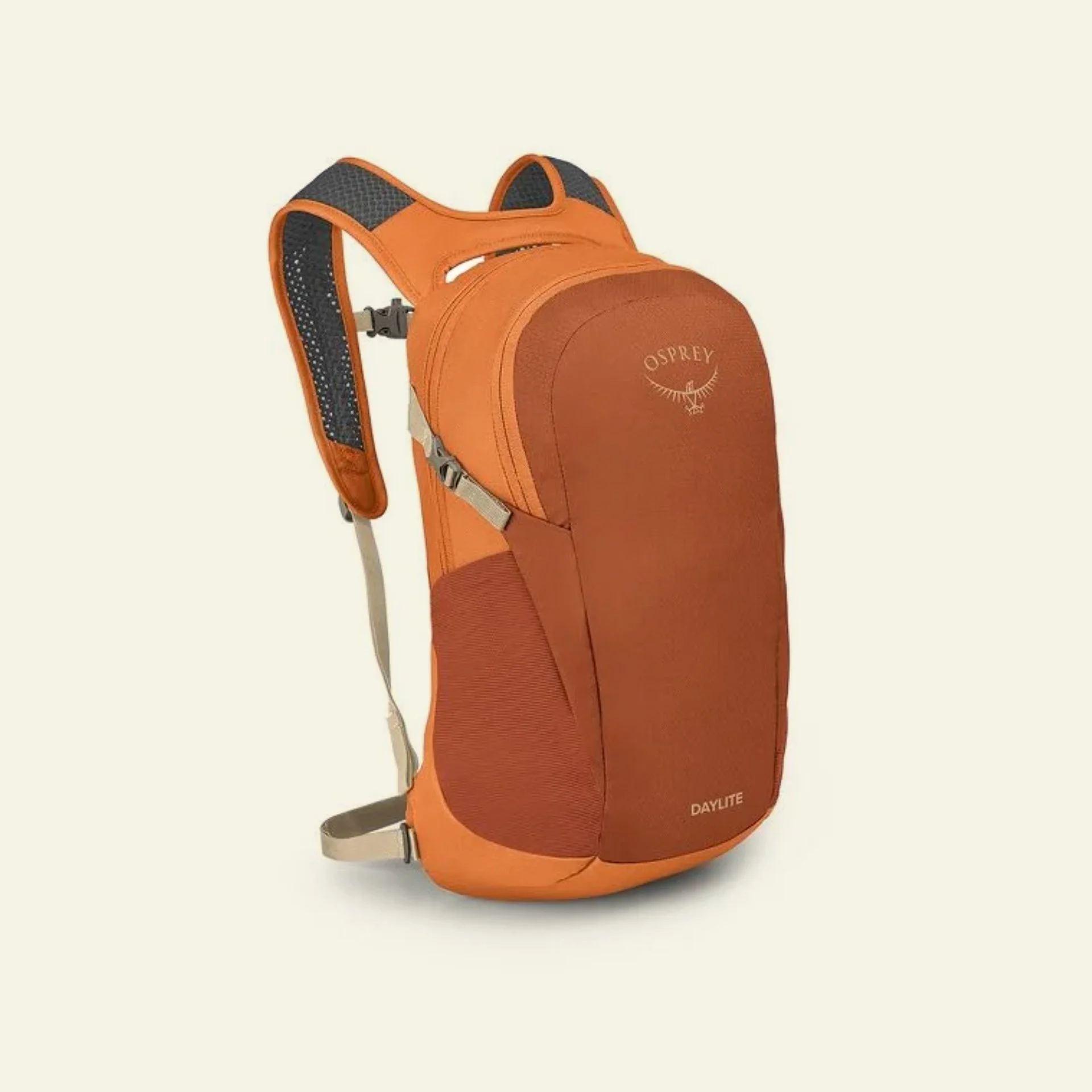
For day hikes and everyday urban adventures, Osprey’s Daylite pack is one of our favorites. It’s sized right for an all-day hike, and its high-quality construction will handle years of wear and tear. The pack has a well-ventilated back and comfortable shoulder straps that include a sternum strap with integrated whistle. It’s well-organized, with a sleeve for a hydration bladder, exterior pockets for a headlamp, notebook, map, and compass, a side water bottle sleeve (perfectly sized for a Nalgene), and room inside for some trail snacks, a camera, and rain gear. The Daylite Plus offers two additional exterior pockets, and padding in the hydration sleeve so it can safely tote a laptop around town. Younger Scouts may prefer the 22L REI Flash for size and fit.
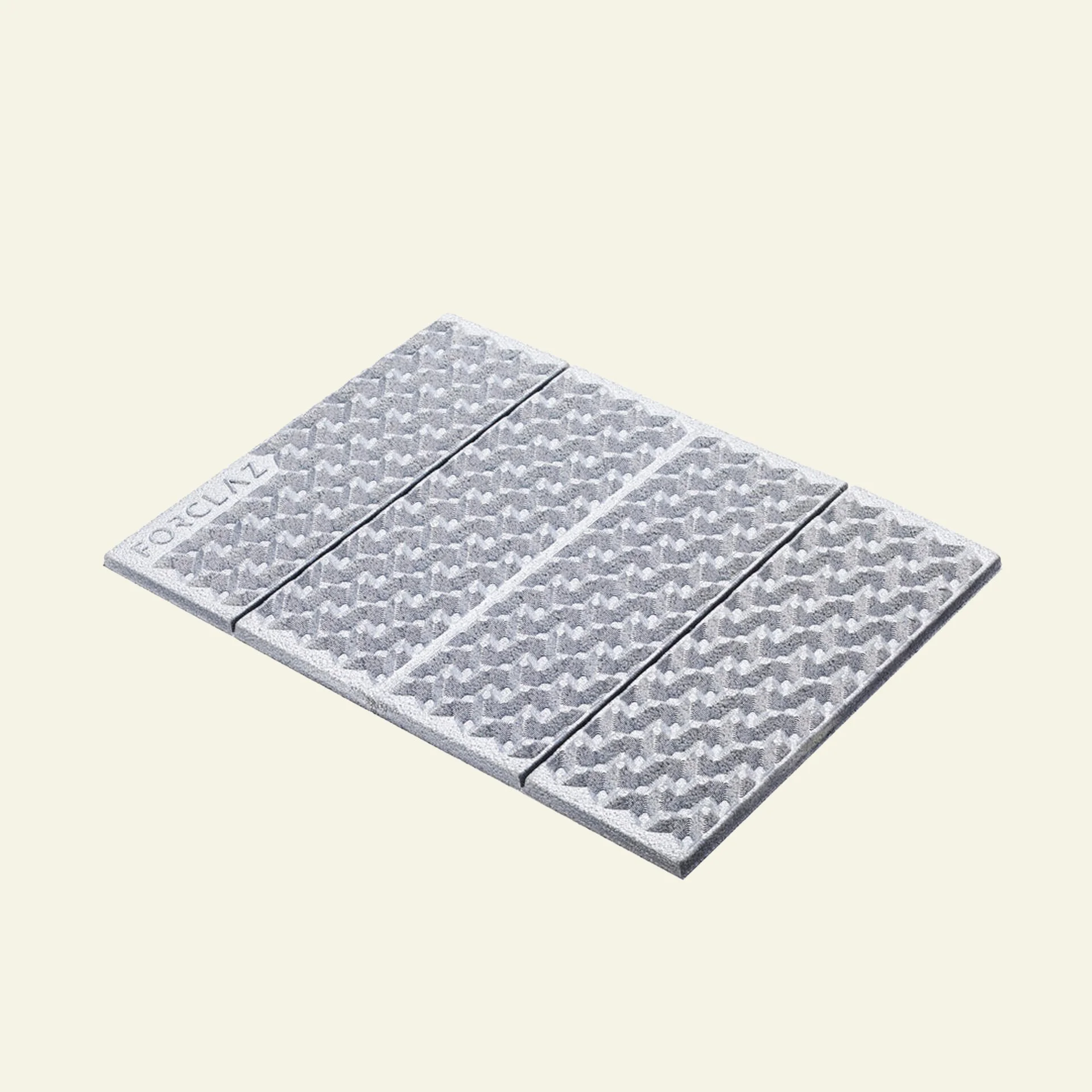
These ultralight and compact backpacking seats have become popular amongst our High Adventure trekkers. Protects you from the cold and moisture for just 2.1 ounces. If you prefer a brand name, the original Thermarest is popular option.
LEMS minimalist hiking shoes are lightweight, durable, and ‘normal’ looking enough to wear everyday. And they happen to come in troop colors.
$108 at LEMS
This soft, stretchy, 35 SPF bandana is quick-drying, odor-resistant and has so many facts printed on it that you’ll learn something new every time you wear it. There are also larger versions, suitable for also using as a sling, and more illustrated designs.
We like the low profile, bright orange version as actual performance gear in the field. Your Scout may prefer the trendy cuffed beanie in Carhartt’s signature tan. Amazon also has the cuffed beanie in orange.
$19 from Carhartt
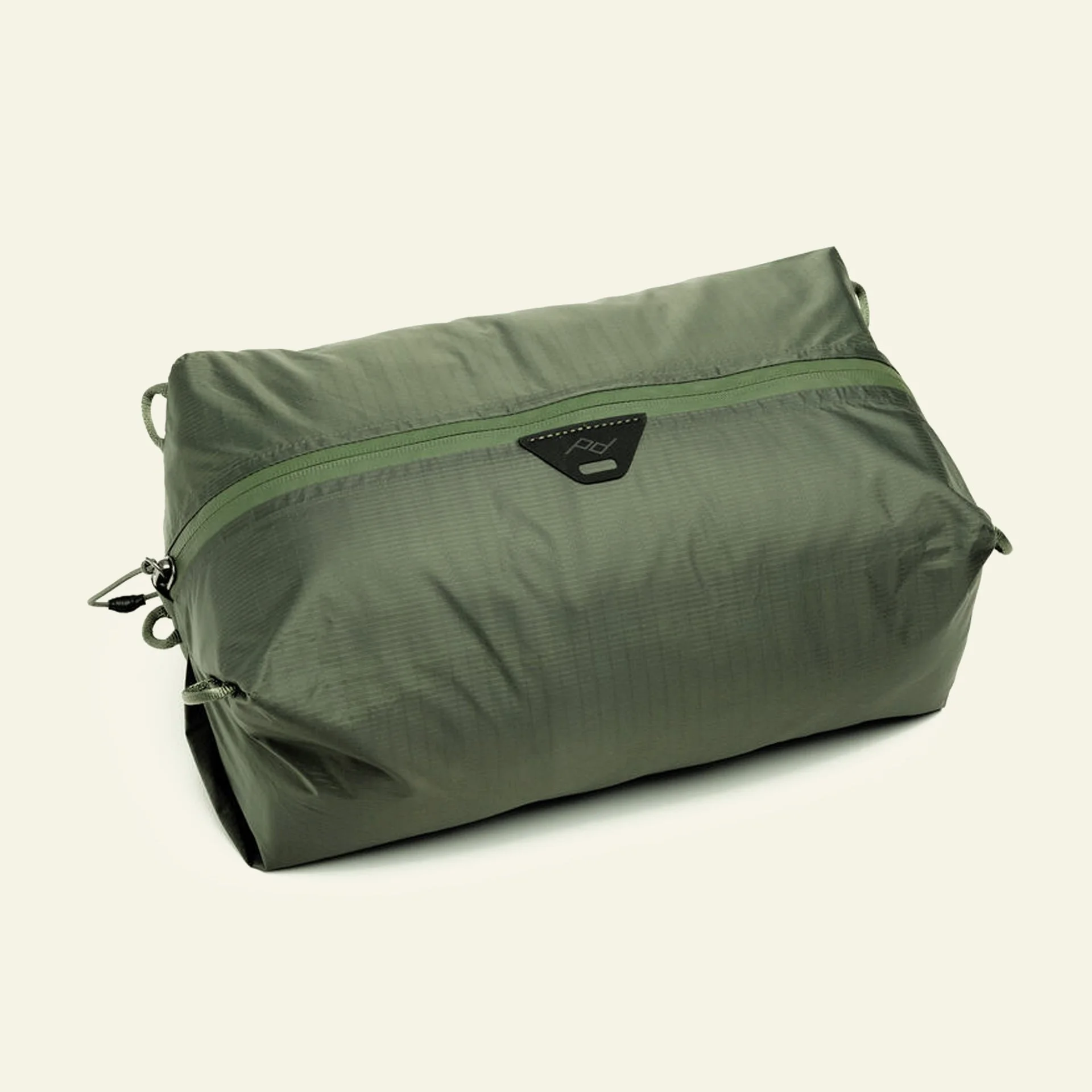
Organize gear and add an extra measure of weather protection with packing cubes. Liam at REI is a fan of Peak Design for their design, weight, and durability—and they can double as a sling pack. For price, you can also go fully waterproof with options from Hyperlite.
From $12 at Peak Design
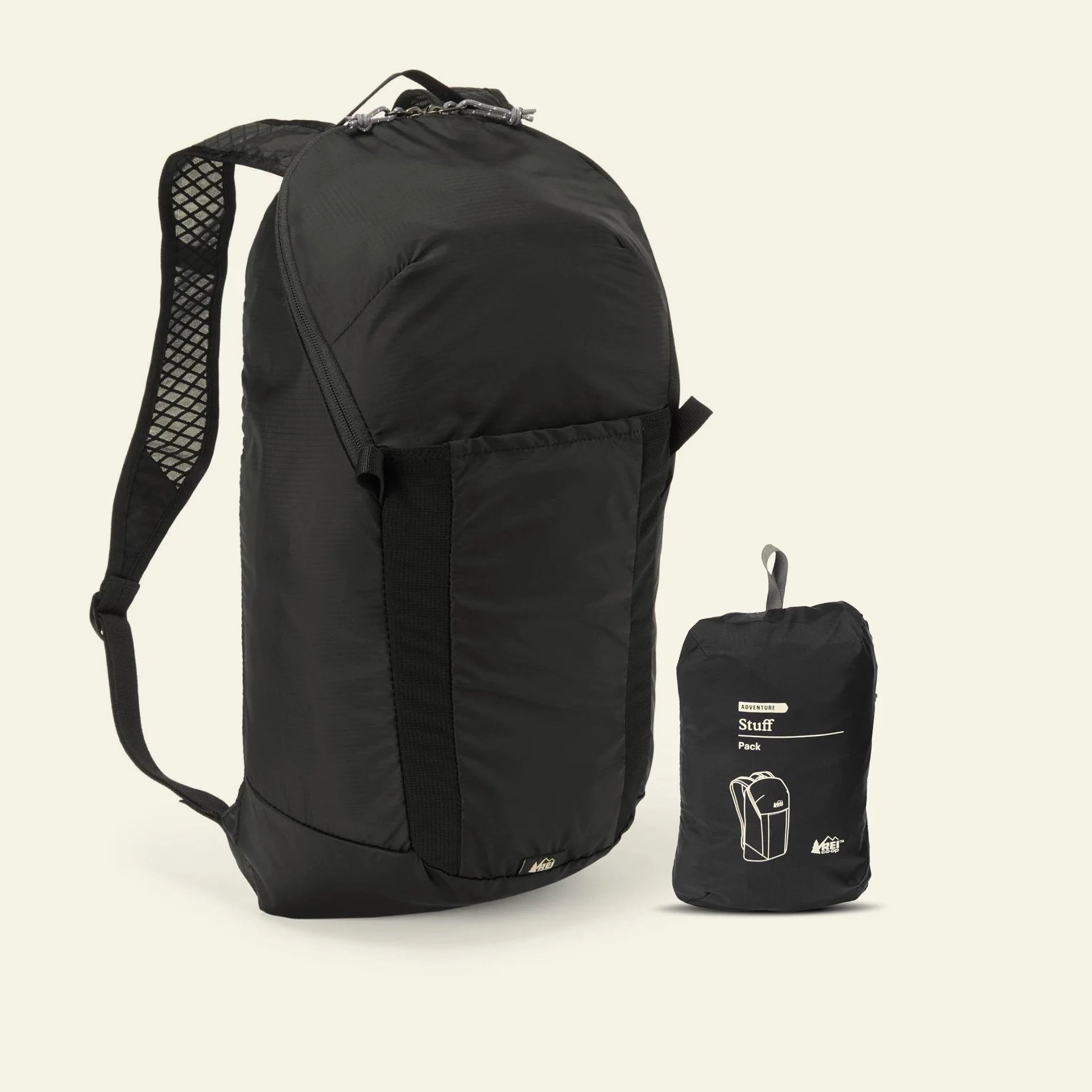
Everyone needs a daypack. This one is great for older Scouts and backpackers. It stuffs down into its own pocket to about the size of a water bottle, making it perfect to throw in a larger backpack and break out for side trips, scrambles, and other mini-adventures on longer trips.
$39 from REI
Though not officially one of the Ten Essentials, a reliable watch is an indispensable tool on any outing. They work after your phone runs out of juice and can be used to help calculate distance, note the time of an injury, and just generally stay on schedule. In an emergency, an analog watch can be used as a compass. Timex’s Expedition watch is a solid option—with a secure NATO-style band and water resistance to 50 meters.
Made from lightweight microsuede, the Nomadix Bandana towel isn't your average bandana. It's a sweat absorber, sun shielder and mess cleaner upper (for long days (or weeks) outside. Bandanas have a multitude of uses, including water pre-filter, dust mask, tourniquet, trail marker, bandage, sling, sweatband, wash cloth, pot holder, signal flag, makeshift hat, towel, fire building tinder, ankle wrap, cold compress, improvised bag, and more…
Compression sacks help organize gear and keep it compact—essential for longer treks. Most Scouts are familiar with using these for sleeping bags, but they can be used for clothes as well. Keep dirty clothes separate, an emergency base layer set dry and handy, or that insulator compact and stowed away until it’s needed.
Yes socks. They may not be exciting, but a backpacking adventure is—and nothing will ruin that faster than cold feet or blisters. Quality wool socks will help take your Scout far. Wool is naturally moisture wicking and anti-microbial. They can be worn for days without smelling or irritating, and they’re quick-drying so you can wash them on the trail. Smartwool is one of our tried and trusted brands. Darn Tough socks live up their name and have an unbelievable lifetime warranty.
$25 at REI
A Scout should have pen and paper on them at all times. This compact, highly visible, waterproof pen from Rite in the Rain should be staple in any pack.
$7 from Rite in the Rain
Safe for tents, lightweight, and sustainable, these slim, collapsible lanterns are convenient—but not essential—upgrade to your camping experience. And they let you save your more powerful battery-powered lights for when they’re really needed.
Scouts know that the lake and river water we depend on while camping is unsafe to drink untreated. Normally we boil or bulk filter these natural water sources, but in an emergency a portable water filter like Lifestraw could save your life. There are several varieties to choose from. The Peak series is small, lightweight, and affordable. Make one a part of your survival kit.
A warm insulating layer isn’t just the difference between cold and comfort—in certain conditions it can be a matter of life and death! Patagonia’s Nano Puff jacket is one of the best on the market. It’s pricey, but if it’s in your budget and your Scout is at an age where their clothes are likely to fit them for a while, a quality insulator is a worthwhile investment. For a more budget-conscious option, Uniqlo has an Ultra Light Down Jacket for around $70. That sounds too good to be true but backpacker forums actually give it good reviews.
Tip: Torrey Pine Green and Seabird Grey look great with a Scout uniform.
A quality backpack is not a small investment; but choosing the right one can be the difference between an enjoyable trek and a laborious one. Our Troop’s High Adventure Trekkers favor the Osprey Atmos AG 65. Its 65-liter capacity carried all our gear and supplies for a 50-mile trek. It’s relatively lightweight, but has adjustment and organization options that ultralight packs lack. Best of all, it might have the most comfortable suspension system ever. We tested a fully-loaded pack against its nearest competitors and the Atmos AG felt ten pounds lighter! The experts at REI can help you select the right pack for your size and activity. It’s best to get fitted in person, but if you know a few critical measurements they can help you out.
$150–$350 at REI
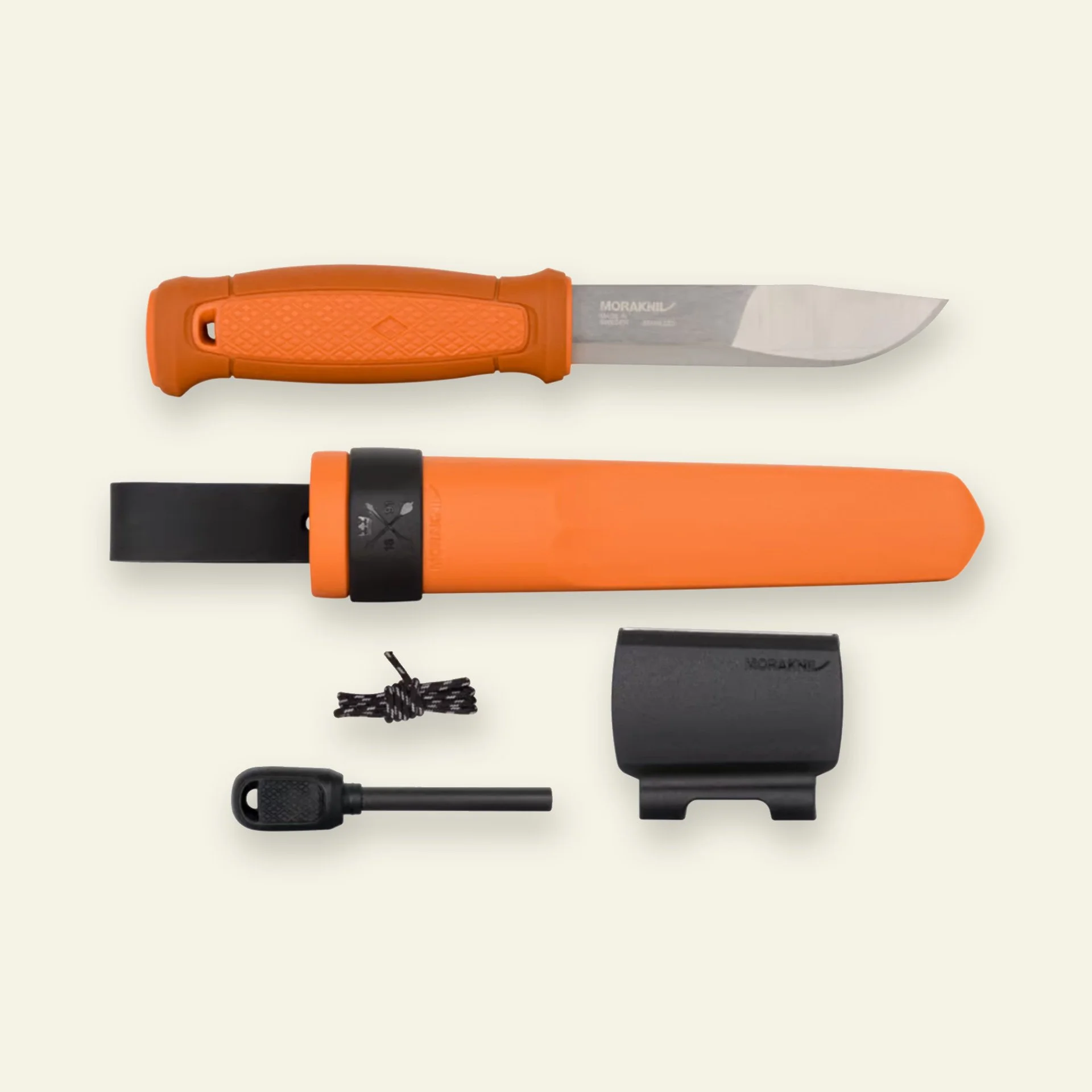
Most “survival” knives are absolute garbage. Swedish-made Morakniv is the exception. Suitable only for older Scouts, this fixed blade knife has an exceptionally sharp 4" blade and comes with one of the best ferrocerium fire-starting rods we’ve used. This is the knife our Scouts used to start their “flint and steel” fires.
For the curious reader in your life, this guide is jam packed with useful wilderness knowledge. From knots to shelters to first aid to hunting to navigating without a compass or map, Bushcraft 101 is thoughtfully organized and well illustrated with 100s of tips for surviving and thriving in the wild.
A Scout should have a notebook with them at all times. We took Field Notes brand expedition notebooks with us on our 50-Miler. They’re pocket-sized and made of durable, waterproof paper that you can write on in even the harshest conditions. Rite in the Rain is another maker of waterproof notebooks that has even smaller and less expensive versions you can stash in your survival kit.
$14 from Field Notes
Keep your head warm with toasty with a merino wool beanie. Minus33 makes a highly-rated and very affordable version for just $22. Available in 26 colors but we like Blaze Orange to make head counts easier! Smartwool is another high-quality brand.
Books & Games
Waterproof Playing Cards
For those Sweet camping trips
Home Skills
From Good Housekeeping
Survival Playing Cards
Get lost in the fun, not on the trail
Scout Fieldbook
The other half of the Scout Handbook
FM 21-76
US Army Survival Manual
How to Stay Alive in the Woods
All the skills. None of the gear.
The Call of the Wild
Dogs. Canada, Survival.
Organization
Pack A Pack
Pack a pack in your pack
Stuff Sacks
Ultralight, ultra cheap. Ultra organized.
3oz Pack Liner
Waterproof your pack
Ditty Bag
Independent, inexpensive alternative to overpriced dopp kits.
Flash Bags
Color code your kit
Food & Drink
Dehydrated Sriracha
Yes, it exists.
Titanium Spork
Two ultralight utensils in one
Ultralight Mug
Same titanium. Half the price
Gourmet Trail Meals
Kimchi. Venison, Turkish granola…
Maple Energy
Not from Vermont!
Nalgene Cap
Makes a wide-mouth Nalgene drinkable
Comfort
Inflatable Pillow
Like sleeping on air…because you are
Mosquito Head Net
Save your face
Rechargeable Hand Warmers
Rechargeable. Magnetic.
Survival
Don't Die Out There
Playing cards with survival tips
SOL Mylar Blanket
Life-saving shelter in an emergency
Signal Mirror
With built in compass and whistle
TinderZips
Emergency fire starter zipper pulls
Hurricane Whistle
122dB. Bright Orange. Built in Clip
SurvivorCord
With fire starter, fishing line, snare wire
Stormproof Matches
Plus a waterproof container + tinder
Hygiene
Trail Brush
Turn your spork into a toothbrush!
Soap Leaves
Tiny, light, biodegradable soap
Dr. Bronner’s
Cleans bodies, floors, dishes, and teeth
Unpaste
Dehydrated toothpaste tabs
Backpack Bidet
No more hiking out TP
Body Glide
Anti-chaffing balm
Camp Towel
Super absorbent fast-drying microfiber
Tech
Waterproof AirTag Case
Rugged. Waterproof. Dustproof.
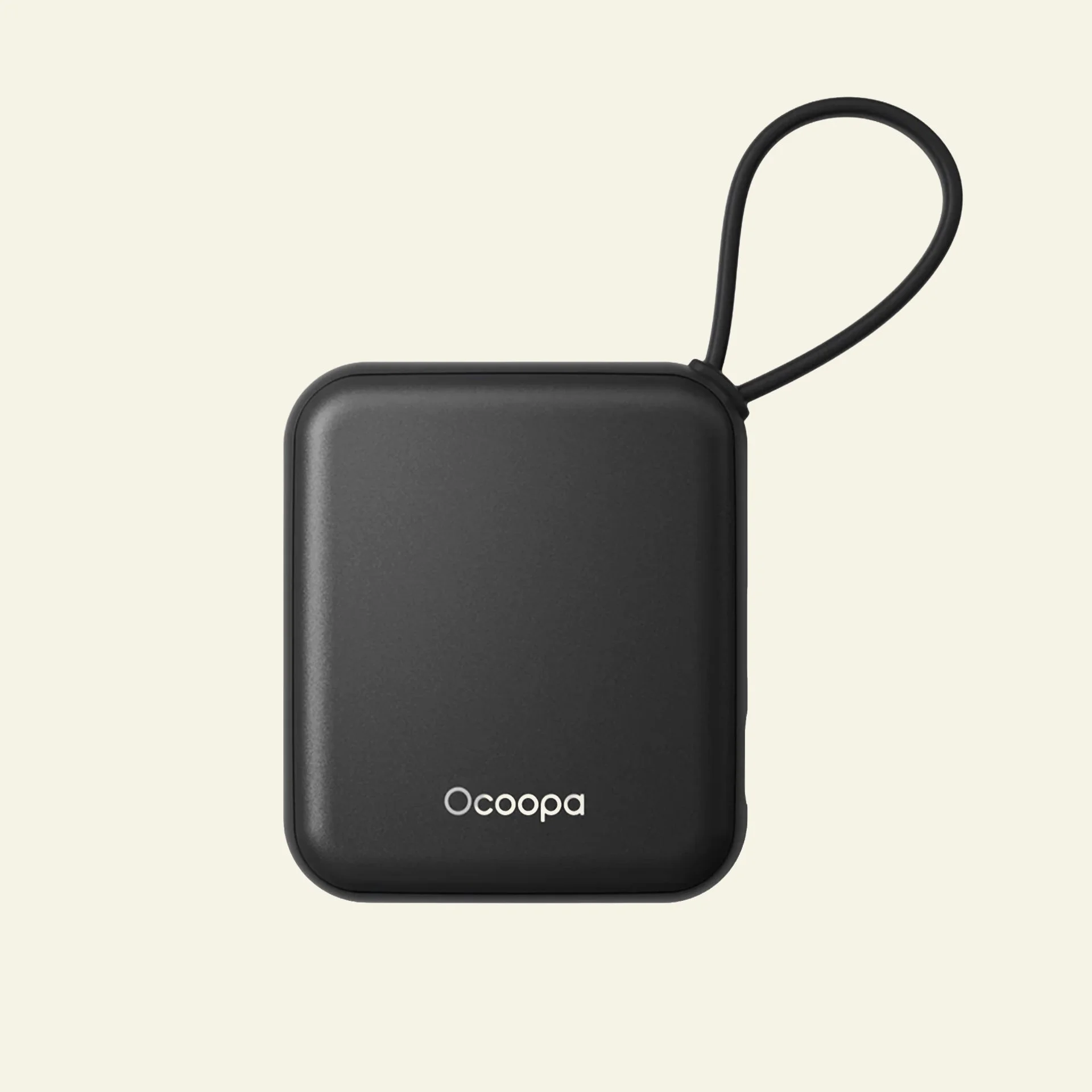
Magsafe Power Bank
For the devices you should have left behind

Lights
Mini Keychain Flashlight
Tiny. Magnetic. Rugged. Rechargeable.
Waterproof Flashlight
A lantern, flashlight, and strobe in one
Micro Lantern
Use inside or outside your pack or tent
Chem Lights
Military grade glow sticks
Other Stuff
Duct Tape
Little bitty rolls of it
Firebiner
Utility carabiner with fire
Pocket Starfinder
A map of the night sky
This wilderness survival course teaches both primitive and modern survival know-how and techniques including shelter, fire, emotional management for emergencies, water-finding and purification (without modern tools or materials). wild foraging and hunting techniques, land navigation fundamentals, and more. Our Scoutmaster has taken this course and recommends it!
$140 from CA Survival School
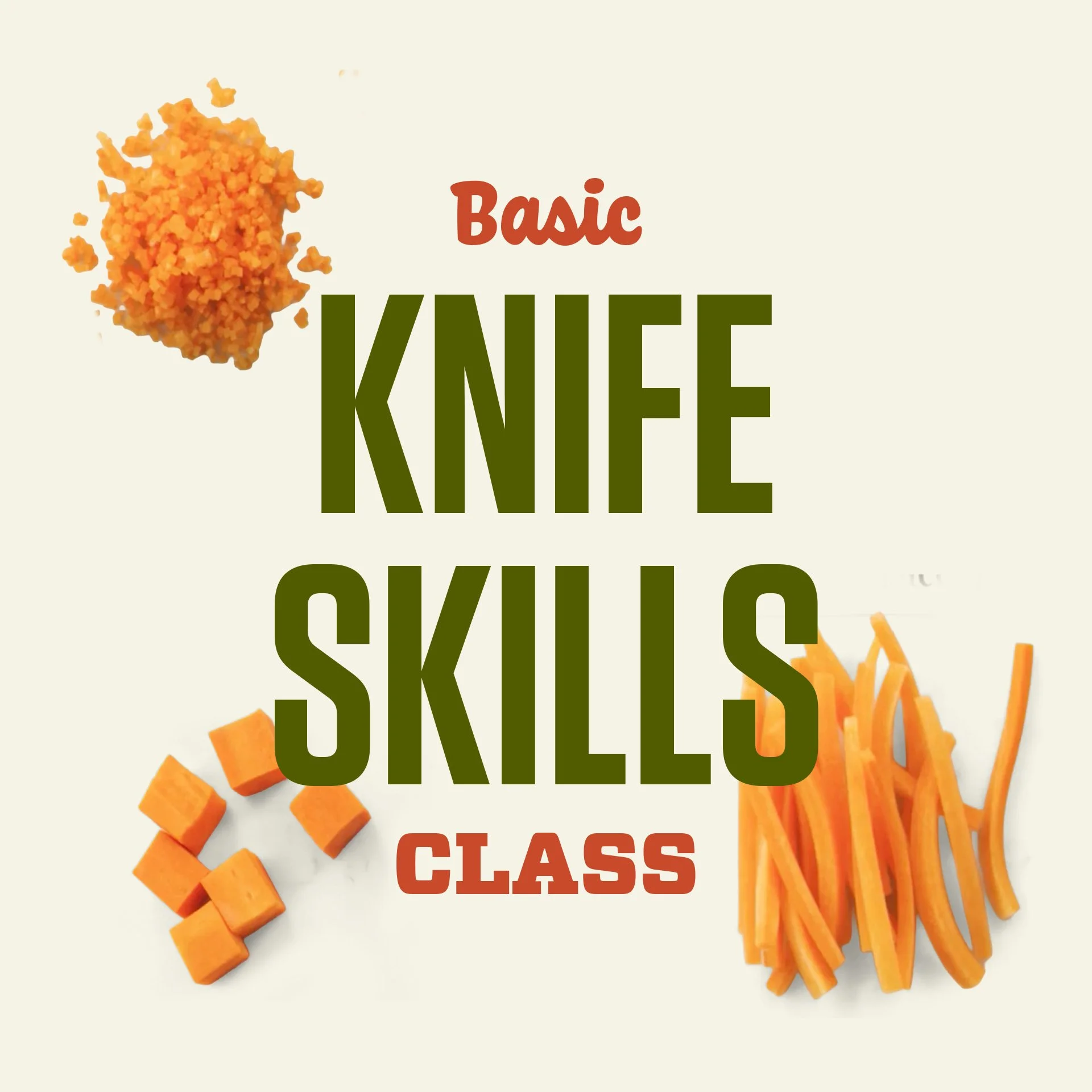
Ask your child to list Christmas presents they received last year and you might be surprised by how few they remember. Now ask them where you went on your last vacation. Experiences last longer than things. This beginners class will teach the ins and outs of chef knife use, care, honing, and safety. You will walk away more confident in cutting vegetables and herbs with an array of essential skills. Note: these classes are geared toward adults but you can call 18 Reasons to set up youth-oriented classes.
$115 at 18 Reasons
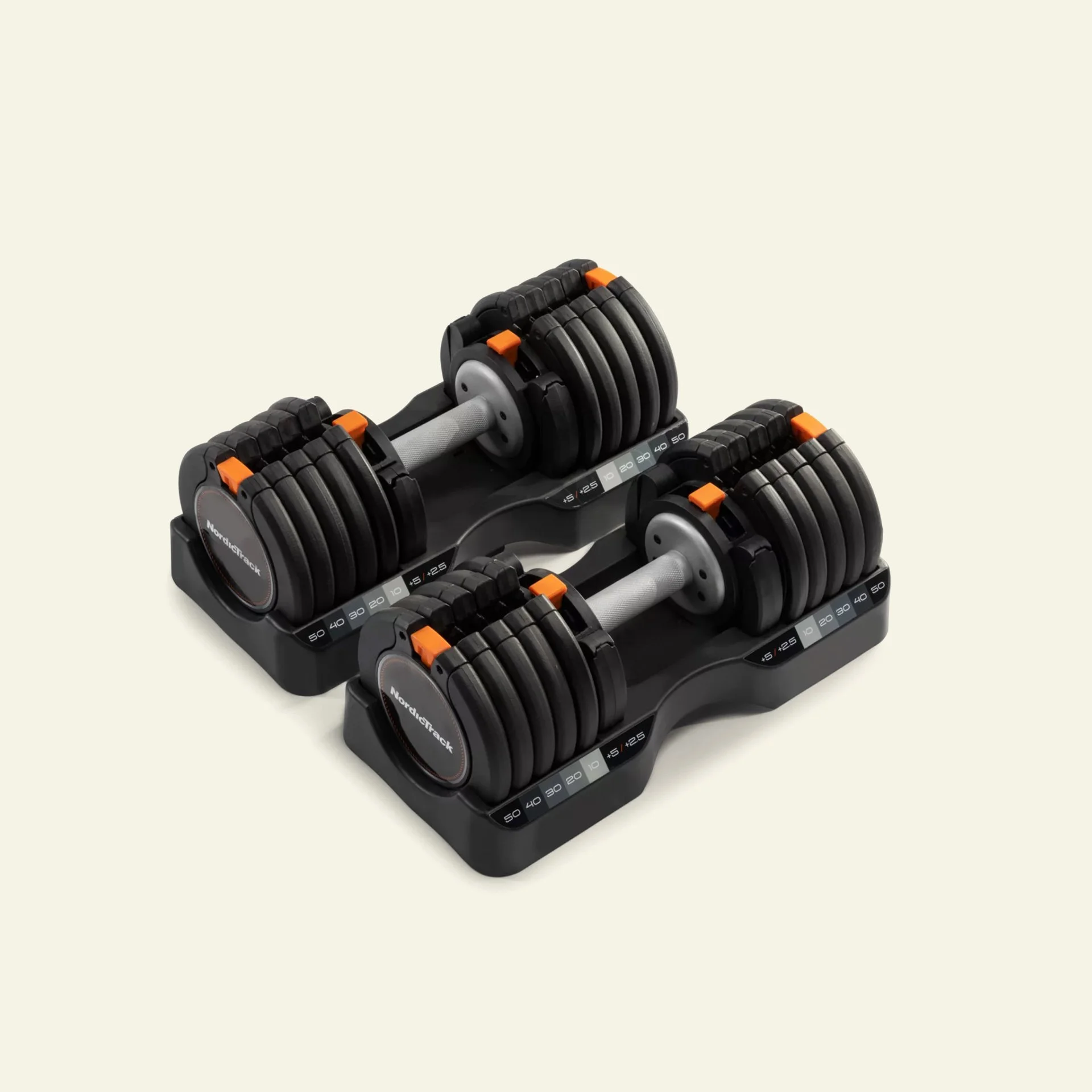
Selectable dumbbells offer adjustable weights from 10 to 55 pounds, depending on the set. They take up far less space than a full set of free weights, and cost considerably less as well. Most experts suggest that kids be 14 before starting serious resistance training. Pair it with a deck of exercise cards (or app).
$150 from Amazon
MagSafe phone and watch charging, plus two integrated cables, one USB C port and a status display. And it comes in Scout colors.
When backpacking, having a second pair of shoes to wear around camp will change your life. These lightweight, quick-drying, super-packable slip-ons have enough protection for camp life and short walks, and water crossings. For a cozier (but bulkier and less versatile) option, check out The North Face’s Traction Mules.
These ultralight and compact backpacking seats have become popular amongst our High Adventure trekkers. Protects you from the cold and moisture for just 2.1 ounces. If you prefer a brand name, the original Thermarest is popular option.
For day hikes and everyday urban adventures, Osprey’s Daylite pack is one of our favorites. It’s sized right for an all-day hike, and its high-quality construction will handle years of wear and tear. The pack has a well-ventilated back and comfortable shoulder straps that include a sternum strap with integrated whistle. It’s well-organized, with a sleeve for a hydration bladder, exterior pockets for a headlamp, notebook, map, and compass, a side water bottle sleeve (perfectly sized for a Nalgene), and room inside for some trail snacks, a camera, and rain gear. The Daylite Plus offers two additional exterior pockets, and padding in the hydration sleeve so it can safely tote a laptop around town. Younger Scouts may prefer the 22L REI Flash for size and fit.
Ishi in Two Worlds tells the life story of the last known surviving member of the Yahi people, an indigenous community decimated by genocide during the California Gold Rush. Ishi lived for decades in the Mount Lassen foothills before being captured and brought to San Francisco where he spent the rest of his life confined as a living exhibit at Museum of Anthropology. This is an important and harrowing book best suited for older Scouts.
$16 from Amazon
LEMS minimalist hiking shoes are lightweight, durable, and ‘normal’ looking enough to wear everyday. And they happen to come in troop colors.
$108 at LEMS
Our economy is rooted in scarcity, competition, and the extracion of resources. Indigenous scientist Robin Wall Kimmerer offers an alternative vision for how to orient our lives around gratitude, reciprocity, and community, based on the lessons of the natural world. Her model is the serviceberry, a tree that distributes its abundance of sweet, juicy berries to meet the needs of its natural community and ensure its own survival.
$14 from Thrift Books
Did you know that the boysenberry pie at Yosemite National Park has been made the same way for the last 60 years? All over the US, national parks have signature food offerings. This cookbook collects more than 70 of those recipes, inspired by their iconic lodges, landscapes, and chefs. Makes a helpful nudge for Scouts needing to complete requirement 4 of their Cooking merit badge, or cooking requirements for Tenderfoot, Second Class, or First Class.
$26 from Powell’s
Organize gear and add an extra measure of weather protection with packing cubes. Liam at REI is a fan of Peak Design for their design, weight, and durability—and they can double as a sling pack. For price, you can also go fully waterproof with options from Hyperlite.
From $12 at Peak Design
On backpacking trips and even shorter day hikes, trekking poles are becoming more an more popular in the troop. They offer stability on uneven terrain and increase endurance overall. On downhills, they make life easier on your joints. On uphills, they make ascents feel easier. Quality poles can easily approach the $200 rang. Black Diamond has quality poles for around $65, but this $30 option from Cascade Mountain Tech gets solid reviews from serious backpackers.
$29 from Bass Pro Shop
Everyone needs a daypack. This one is great for older Scouts and backpackers. It stuffs down into its own pocket to about the size of a water bottle, making it perfect to throw in a larger backpack and break out for side trips, scrambles, and other mini-adventures on longer trips.
$39 from REI
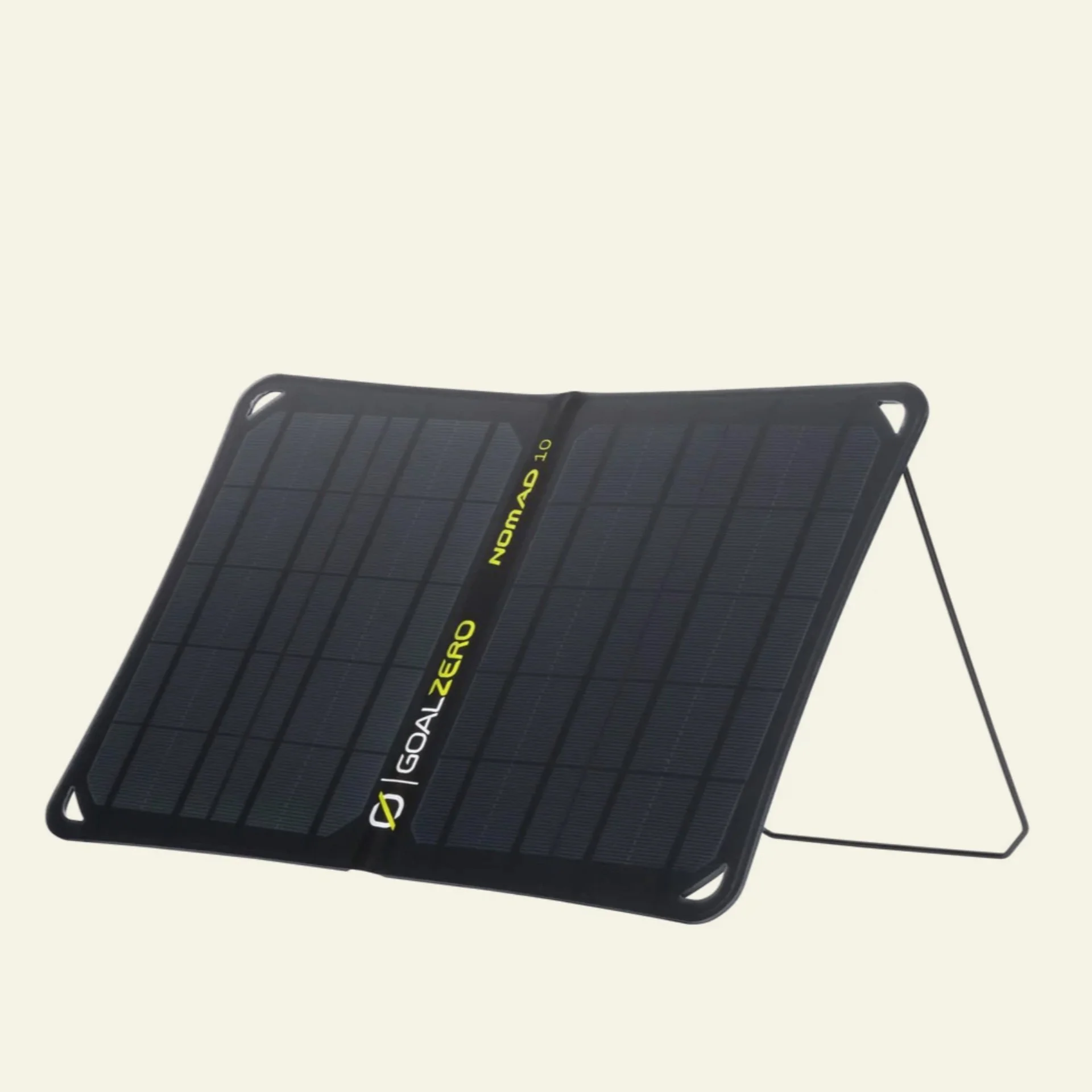
While we encourage unplugging on outings, older Scouts have the maturity and responsibility to care for things like cameras, smart watches, and other gadgets that are useful on and off the grid.
GoalZero’s Nomad 10 Portable Solar panel is hard to beat for price and function. We use one to ensure critical devices like emergency GPS always have power.—and we like that its folding design helps protect the solar cells. A weather-resistant power bank can be used on it’s own, or paired with a solar panel for unlimited recharging. Avid backpackers may prefer a slimmer, lighter weight option from BioLite.
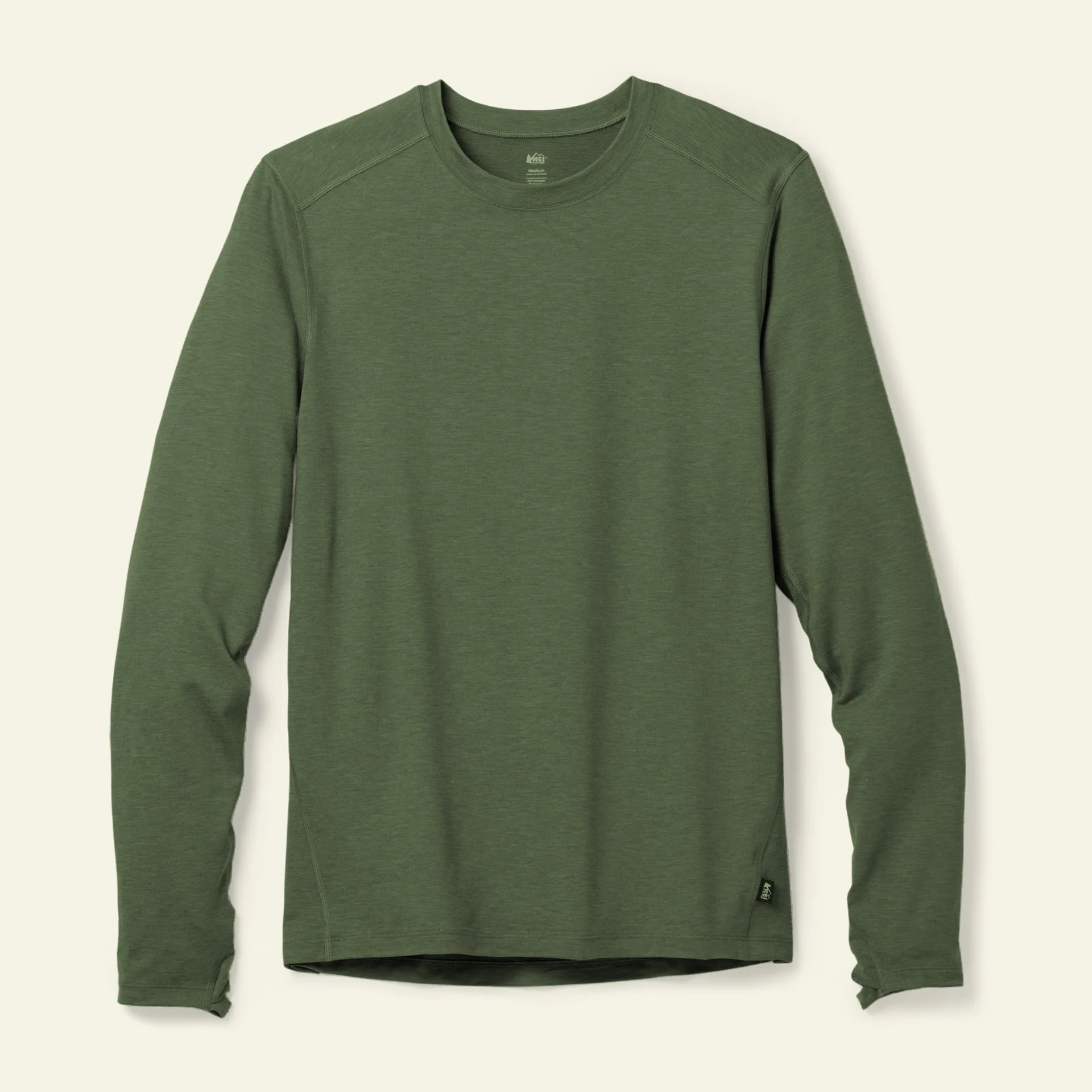
The right base layer can help keep a Scout dry, warm (or cool), and better smelling. Wool is by far the best choice. Silk and synthetics work too. Base layers should be close-fitting, since their job is to wick moisture and provide insulation next to the skin. Smartwool and Patagonia are top-rated but pricey brands. REI’s Midweight line is a more affordable and high-performing option.
Camp chairs are a bit of a luxury, but for some the comfort of having a soft place to sit off the ground is worth the extra weight. REI’s $79 Flexlite Camp Chair weighs 1 lb., 11 oz. Helinox’s Chair Zero weighs an even pound but is twice the price.
From $79 at REI
Yes socks. They may not be exciting, but a backpacking adventure is—and nothing will ruin that faster than cold feet or blisters. Quality wool socks will help take your Scout far. Wool is naturally moisture wicking and anti-microbial. They can be worn for days without smelling or irritating, and they’re quick-drying so you can wash them on the trail. Smartwool is one of our tried and trusted brands. Darn Tough socks live up their name and have an unbelievable lifetime warranty.
$25 at REI
A Scout should have a notebook with them at all times. We took Field Notes brand expedition notebooks with us on our 50-Miler. They’re pocket-sized and made of durable, waterproof paper that you can write on in even the harshest conditions. Rite in the Rain is another maker of waterproof notebooks that has even smaller and less expensive versions you can stash in your survival kit.
$14 from Field Notes
A Scout should have pen and paper on them at all times. This compact, highly visible, waterproof pen from Rite in the Rain should be staple in any pack.
$7 from Rite in the Rain
Safe for tents, lightweight, and sustainable, these slim, collapsible lanterns are convenient—but not essential—upgrade to your camping experience. And they let you save your more powerful battery-powered lights for when they’re really needed.
Scouts know that the lake and river water we depend on while camping is unsafe to drink untreated. Normally we boil or bulk filter these natural water sources, but in an emergency a portable water filter like Lifestraw could save your life. There are several varieties to choose from. The Peak series is small, lightweight, and affordable. Make one a part of your survival kit.
A warm insulating layer isn’t just the difference between cold and comfort—in certain conditions it can be a matter of life and death! Patagonia’s Nano Puff jacket is one of the best on the market. It’s pricey, but if it’s in your budget and your Scout is at an age where their clothes are likely to fit them for a while, a quality insulator is a worthwhile investment. For a more budget-conscious option, Uniqlo has an Ultra Light Down Jacket for around $70. That sounds too good to be true but backpacker forums actually give it good reviews.
Tip: Torrey Pine Green and Seabird Grey look great with a Scout uniform.
A quality backpack is not a small investment; but choosing the right one can be the difference between an enjoyable trek and a laborious one. Our Troop’s High Adventure Trekkers favor the Osprey Atmos AG 65. Its 65-liter capacity carried all our gear and supplies for a 50-mile trek. It’s relatively lightweight, but has adjustment and organization options that ultralight packs lack. Best of all, it might have the most comfortable suspension system ever. We tested a fully-loaded pack against its nearest competitors and the Atmos AG felt ten pounds lighter! The experts at REI can help you select the right pack for your size and activity. It’s best to get fitted in person, but if you know a few critical measurements they can help you out.
$150–$350 at REI
Most “survival” knives are absolute garbage. Swedish-made Morakniv is the exception. Suitable only for older Scouts, this fixed blade knife has an exceptionally sharp 4" blade and comes with one of the best ferrocerium fire-starting rods we’ve used. This is the knife our Scouts used to start their “flint and steel” fires.
Keep your head warm with toasty with a merino wool beanie. Minus33 makes a highly-rated and very affordable version for just $22. Available in 26 colors but we like Blaze Orange to make head counts easier! Smartwool is another high-quality brand.
Nalgene brand water bottles are cheap and durable and the default vessel of most hikers and campers. the 32 oz size holds enough water for an average 5-6 mile hike, but Scouts also use them as containers for survival kits and nighttime sleeping bag warmers. This special edition version Includes 63 durable, water-resistant, national park stickers by artist Erikas Chesonis, which can be used to keep track of your bucket list national park visits.
This soft, stretchy, 35 SPF bandana is quick-drying, odor-resistant and has so many facts printed on it that you’ll learn something new every time you wear it. There are also larger versions, suitable for also using as a sling, and more illustrated designs.
The right base layer can help keep a Scout dry, warm (or cool), and better smelling. Wool is by far the best choice. Silk and synthetics work too. Base layers should be close-fitting, since their job is to wick moisture and provide insulation next to the skin. Smartwool and Patagonia are top-rated but pricey brands. REI’s Midweight line is a more affordable and high-performing option.
Made from lightweight microsuede, the Nomadix Bandana towel isn't your average bandana. It's a sweat absorber, sun shielder and mess cleaner upper (for long days (or weeks) outside. Bandanas have a multitude of uses, including water pre-filter, dust mask, tourniquet, trail marker, bandage, sling, sweatband, wash cloth, pot holder, signal flag, makeshift hat, towel, fire building tinder, ankle wrap, cold compress, improvised bag, and more…
The importance of hydration can’t be stressed enough. The rule of thumb while hiking is ½ liter of water per hour—meaning a 32 oz. water bottle will last your Scout about 5 miles. For anything longer, adding a hydration bladder is key. These expandable bladders are suspended inside your pack and have a flexible straw that attaches to your shoulder strap. Some brands have bladders sized specifically for their packs, but by and large they are universal. CamelBak and Hydrapak are reliable choices
$35–$55 at REI
One of the 10 Essentials. Nalgene brand water bottles are cheap and durable. They come in a range of colors, have tethered caps that won’t get lost, measurements on the side to make cooking easy, and a wide mouth for easy filling. They can even be personalized. If your Scout is a minimalist, their Ultralite line is one of the few times an ultralight version is cheaper than the standard version.
A warm insulating layer isn’t just the difference between cold and comfort—in certain conditions it can be a matter of life and death! Patagonia’s Nano Puff jacket is one of the best on the market. It’s pricey, but if it’s in your budget and your Scout is at an age where their clothes are likely to fit them for a while, a quality insulator is a worthwhile investment. For a more budget-conscious option, Uniqlo has an Ultra Light Down Jacket for around $70. That sounds too good to be true but backpacker forums actually give it good reviews.
Tip: Torrey Pine Green and Seabird Grey look great with a Scout uniform.
Quality rain gear should be waterproof, breathable, and durable. It shouldn’t necessarily be expensive. You can easily spend $300 and up for a good, technical jacket, but there are sensible options for half that, half that, and half that. REI Co-op and Columbia are two reliable brands; each offers jackets for about $80. For growing kids, you might consider Frog Toggs, an ultra-cheap brand that swirls up fierce debate among hiker’s of the Pacific Crest Trail.
Every Scout should have and know how to use a compass. The most useful design is one with a clear baseplate and ruler. These are the easiest to use with a map, they’re slim, and they’re durable. A small button compass or one that is basically an add-on to another tool is a good backup, but just not practical for typical use.
The best first aid kit is one a Scout assembles themself. A conspicuously colored and labeled pouch will make it easy to find when seconds count. The pouch can be anything from a waterproof dry bag to a purpose-built option with lots of organization which you fill with supplies that match your personal needs and activities.
Headlamps are great alternatives to flashlights, leaving your hands free to for other tasks like cooking, carrying trekking poles, etc. Black Diamond and Petzl are two quality brands. Black Diamond’s Astro 300 is a bargain at $20. As you go up in price you’ll get brighter lights and more features—like rechargeability and night vision saving red light options.
Tip: Opt for an orange casing and headband to make your headlamp easier to find in your pack
If your Scout has their Totin’ Chit they’ve been trained to safely use and care for a knife. A pocket knife is one of the Ten Essentials and a right of passage for many young men. A genuine Swiss Army knife will last a lifetime and get near daily use. We like the Fieldmaster model; it has all the tools a Scout will need (and no corkscrew).
The right base layer can help keep a Scout dry, warm (or cool), and better smelling. Wool is by far the best choice. Silk and synthetics work too. Base layers should be close-fitting (their job is to wick moisture and provide insulation next to the skin). Smartwool and Patagonia are top-rated but pricey brands. REI’s Midweight line is a more affordable and high-performing option. Because younger Scouts will outgrow their clothes quickly, we recommend Uniqlo’s Heattech line. It gets favorable reviews from many experienced backpackers.
The New York Times rated these the best budget rechargeable handwarmers. They’re ultra slim, have three settings, and run for about 5 hours per charge. For little more you can upgrade to a model that heats on both sides, while their bulkiest option offers even more heat and doubles as a power bank.
$24 from Ocoopa